


Shipping liquids through your Shopify store can be challenging due to risks like leaks, carrier restrictions, and strict legal requirements. Whether you’re selling perfumes, oils, beverages, or cosmetics, improper packaging or failure to comply with shipping regulations can lead to costly delays, rejected shipments, or damaged products that frustrate customers and hurt your brand.
Carriers such as USPS, FedEx, UPS, and DHL have specific rules for shipping liquids. Getting liquid shipping right not only protects your profits by preventing losses and fines but also helps maintain customer trust by ensuring products arrive safely and on time. In this article, we’ll show you how to tackle these challenges by choosing the right packaging, following carrier-specific rules, and automating liquid shipping directly within your Shopify store.
In This Article:
- Key Considerations for Liquid Shipping in Shopify
- Special Liquid Shipping Scenarios
- Packaging Liquids Properly for Shipping
- Carrier Rules for Shipping Liquids
- Automating Liquid Shipping on Shopify
- Best Practices for Shipping Liquids on Shopify
- Conclusion
- FAQ’s
Key Considerations for Liquid Shipping in Shopify
Shipping liquids through Shopify requires careful planning to ensure compliance, safety, and customer satisfaction. Below are the most important factors to consider:
1. Type of Liquid: Non-Hazardous vs. Hazardous
- Non-hazardous liquids: Includes items like soaps, lotions, cooking oils, non-alcoholic beverages, and cleaning agents. These typically have fewer restrictions but still require secure packaging.
- Hazardous liquids: Covers flammable, corrosive, or toxic substances like perfumes, nail polish, industrial chemicals, or certain essential oils. These require specific packaging and labeling and may be restricted to ground transport only.
2. Domestic vs. International Liquid Shipping
- Domestic shipping is usually easier, with more service options and fewer paperwork requirements.
- International shipping comes with additional challenges, such as customs declarations and country-specific import bans.
3. Quantity Limitations per Carrier
- Carriers set limits on how much liquid you can ship per package, especially for hazardous items.
Example: With USPS, to send more than 4oz, you need to triple-pack the container with insulating materials and leakproof, sealed containers.
4. Shopify and Carrier Compliance
Your Shopify store setup must align with carrier and legal requirements. This means:
- Correctly categorizing liquid products (e.g., perishable, flammable, and requiring temperature control).
- Ensuring proper documentation, including customs invoices and Dangerous Goods declarations where required.
Special Liquid Shipping Scenarios
When shipping liquids through Shopify, certain products require additional precautions due to safety, regulatory, or temperature control requirements.
1. Perfumes and Essential Oils (Flammable Liquids)
These products are classified as hazardous because of their alcohol or oil content. Most carriers, including FedEx, UPS, and USPS, restrict these items to ground shipping only, as air transport is typically prohibited. Proper packaging and labeling are essential in this case.
2. Alcoholic Beverages
Shipping alcoholic beverages like beer, wine, or spirits requires compliance with federal and state laws. A seller usually needs a special alcohol shipping license, and carriers demand age verification on delivery. Only certain carriers allow alcohol shipments (often under contract), and these are limited to specific states or countries.
3. Perishables (Juices, Sauces, Other Temperature-Sensitive Liquids)
These liquids must be packaged in insulated boxes with cold packs or gel packs to maintain temperature during transit. Expedited shipping services such as overnight or two-day delivery are recommended to reduce spoilage risk. Proper absorbent and leak-proof materials are required to contain any accidental leaks.
Packaging Liquids Properly for Shipping
Ensuring your liquids are packaged correctly is critical to prevent leaks, damage, and carrier non-compliance. Here are the key best practices for shipping liquids from your Shopify store:
- Watertight, sealed primary containers: Always use containers designed to prevent leaks such as bottles with screw caps, tamper-evident seals, or airtight lids.
- Use of tape (X pattern on caps): Apply strong adhesive tape over the caps in an X pattern to secure closures and reduce the risk of the caps loosening in transit.
- Absorbent material and inner liners: Line the interior of your packaging with absorbent materials such as pads or liners to contain any accidental leaks and prevent them from affecting other packages.
- Double-boxing for added protection: Place the wrapped and lined inner box inside a sturdy outer box with cushioning material such as packing peanuts or air pillows for extra impact protection.
- Labeling: “This Side Up,” “Liquid Inside,” hazard labels (if required): Mark the box to indicate the proper orientation and contents. If your shipment includes hazardous liquids, ensure all required hazard labels and carrier-specific markings are visible.
Carrier Rules for Shipping Liquids
FedEx
FedEx liquid shipping is permitted in Shopify but with conditions depending on the liquid’s classification.
- Non-hazardous liquids: No special approval is needed. Ensure proper leakproof packaging and clear labeling.
- Hazardous liquids (flammable, corrosive, alcohol, etc.): Require a Dangerous Goods (DG) declaration, UN ID, and compliant packaging under 49 CFR.
- Shipping method: Ground services (FedEx Ground service is required for most hazardous liquids. Non-hazardous liquids can ship via air or ground, depending on packaging and quantity.
UPS
UPS liquid shipping is allowed, through UPS services but you must follow carrier-specific rules.
- Non-hazardous liquids: It’s prohibited to send glass bottles through its air services. So, only Ground services can be used for this purpose.
- Hazardous liquids: Require Dangerous Goods (DG) packaging, Material Safety Data Sheets (MSDS), and pre-approval for shipping.
- Shipping method: Hazardous liquids must move via UPS Ground. Air shipping is highly restricted for DG liquids.
USPS
When shipping liquids through Shopify with USPS, you must follow strict shipping regulations to stay compliant. Many Shopify sellers regularly search for terms like “shipping liquids USPS.” These search trends show just how common and confusing liquid shipping can be. That’s why it’s important to regularly check your carriers’ documentation and ensure your store remains compliant.
- Non-flammable liquids (e.g., lotions, sauces): Allowed via air or ground. Packaging must be leak-proof and cushioned. To send more than 4oz, you need to triple-pack the container with insulating materials and leakproof, sealed containers.
- Flammable liquids: Flammable liquids with a flashpoint of 20°F (–7° C) or below are prohibited. Other flammable liquids are generally permitted
- Air vs. ground: Flammable = ground only. Non-flammable = air or ground if properly packaged.
DHL Express
DHL liquid shipping only supports the shipping of certain non-hazardous liquids.
- Accepted liquids: Non-hazardous liquids in secure packaging. DHL generally does not accept dangerous liquids (aerosols, Eau de toilettes, perfumes, and aftershaves).
- Alcohol: DHL supports the shipping of alcoholic beverages in many countries, but shippers must have the necessary licenses and meet local import/export rules.
- International limits: Many destinations have specific restrictions on liquid volume, alcohol content, and labeling. Always confirm country requirements before shipping.
Automating Liquid Shipping on Shopify
Manually managing liquid shipments on Shopify can lead to errors, such as selecting restricted carrier services or missing required documentation for hazardous goods. To avoid these risks, it’s smart to automate liquid shipping using trusted apps.
One powerful option is the PH Multi-Carrier Shipping Label app. This app lets you:
- Input UN code and dangerous goods (DG) details directly for each product, making it easier to comply with carrier requirements.
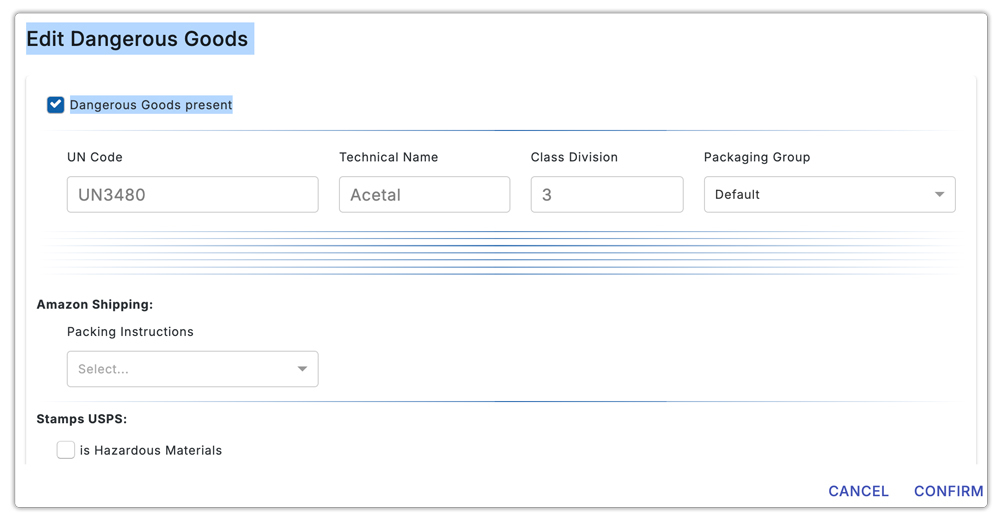
To get an idea of the UN code your product falls under, check out the UN code lists for different products.
- Set up product shipping classes (e.g., “Liquids”) and create automation rules using the shipping class.
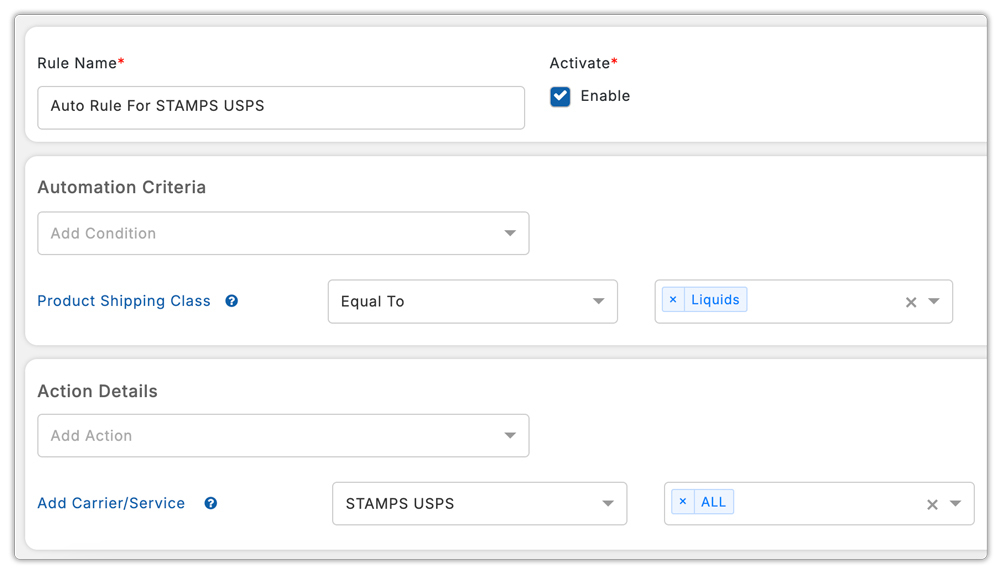
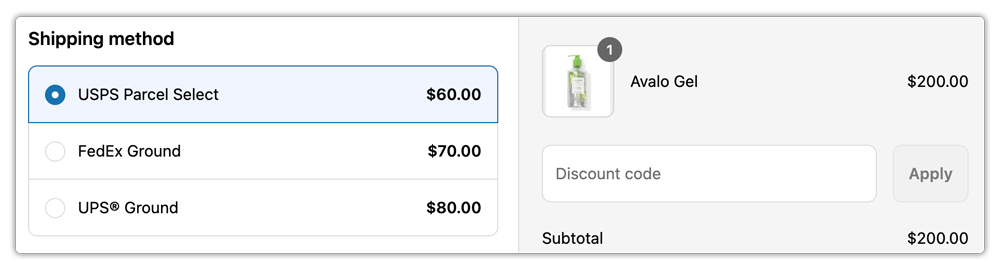
- Once the automation is set up, as soon as a customer checks out with any shippable liquid, your configured services will automatically appear at checkout. This ensures accurate carrier service display at checkout, minimizing errors with international liquid shipping.
Best Practices for Shipping Liquids on Shopify
To ensure safe and compliant delivery of liquids, follow these key best practices:
- Test your packaging: Perform leak and drop tests to confirm that your packaging can withstand handling during transit.
- Keep documentation ready: Maintain records of permits, licenses, and DG declarations where required.
- Stay updated on carrier policies: Liquid shipping rules can change; check with your carriers regularly to avoid compliance issues.
- Use shipping insurance: Protect your business against losses from leaks, damage, or lost packages.
Conclusion
Shipping liquids on Shopify requires careful attention to packaging, carrier regulations, and legal compliance. By following best practices and understanding each carrier’s rules, especially for UPS liquid shipping, FedEx liquid shipping, and DHL liquid shipping, you can ensure smooth, safe deliveries.
With automation tools like the PH Multi-Carrier Shipping Label app, Shopify store owners can simplify complex shipping processes and grow their business confidently, even when dealing with sensitive or regulated products.
FAQ’s
- What is the best way to ship liquids?
Use leak-proof, sealed containers with absorbent material and double-boxing for protection. Follow carrier rules (like using ground shipping for flammable liquids) and use apps like PH Multi-Carrier Shipping Label to automate labels and display accurate shipping options in Shopify.
- What packaging should I use for shipping liquids?
Use sealed, leak-proof containers, apply tape in an X pattern on caps, include absorbent material, and double-box the shipment for maximum protection.
- Do I need special licenses to ship liquids like perfumes or alcohol?
Yes. Some Perfumes are classified as hazardous and require special labeling and ground shipping. Some Perfumes contain alcohol, which requires proper licenses and carrier approval.
- Which carriers allow liquid shipping for Shopify?
USPS, UPS, FedEx, and DHL support liquid shipping, to name a few, but each has specific rules on packaging, quantities, and whether the liquid is flammable or non-hazardous.
