


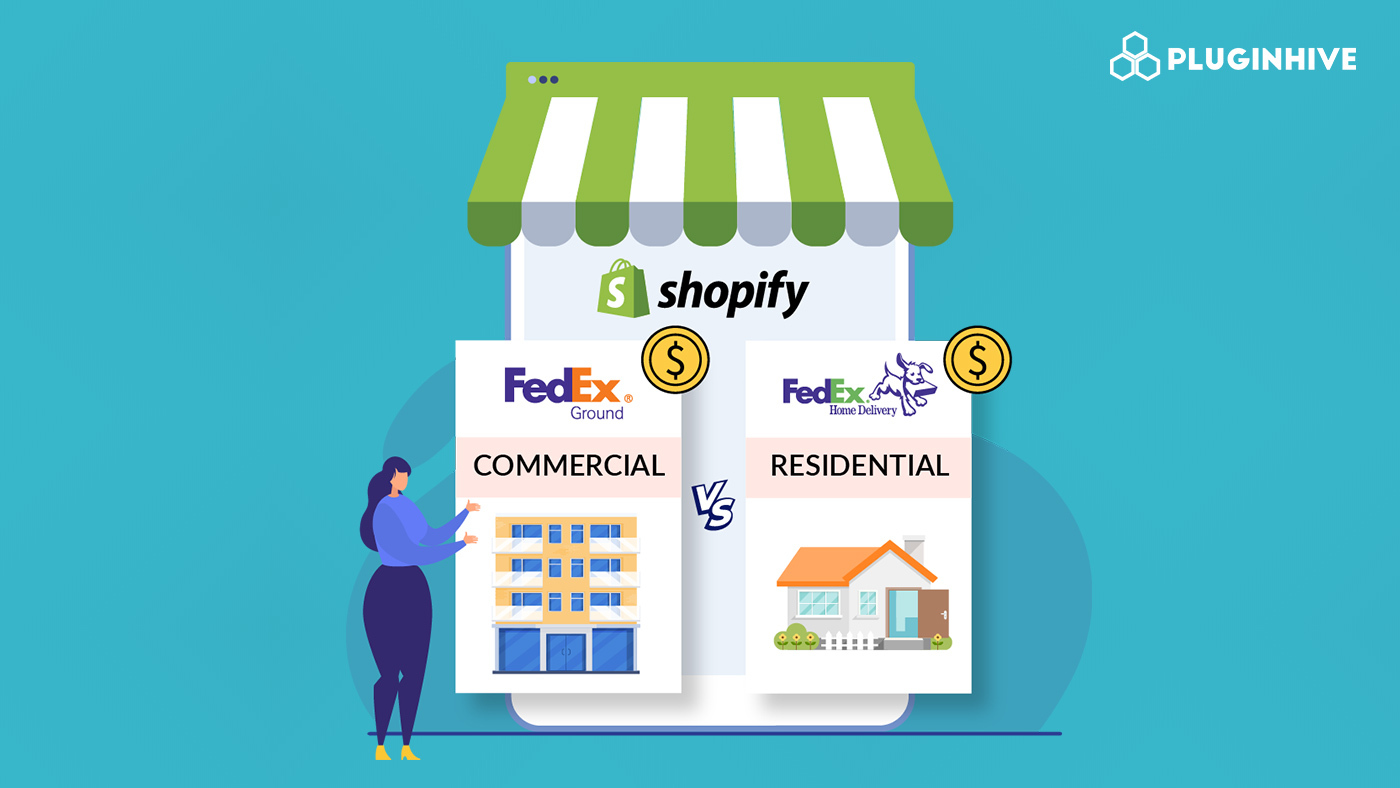
Shopify merchants often notice that two shipments with the same weight, box size, and destination zone can still return different FedEx rates. In most cases, the difference comes from how FedEx classifies the delivery address. This is where FedEx residential delivery matters. Delivering to a home usually costs more than delivering to a business because residential stops are less efficient and may include weekend delivery support. As a result, FedEx residential delivery often includes an additional residential surcharge.
For Shopify stores using live FedEx rates, this directly affects checkout pricing. A commercial address may receive a lower FedEx Ground rate, while a residential address can return a higher Home Delivery rate, which can impact shipping margins over time.
In This Article:
- Understanding How FedEx Classifies Shopify Shipping Addresses
- FedEx Services Used for Residential and Commercial Shopify Deliveries
- Exact FedEx Pricing Difference: Residential vs Commercial
- Additional FedEx Charges in Shopify That Can Increase Residential Costs
- Best Shopify Setup to Handle Commercial and Residential Delivery
- Best FedEx Service Choice Based on Customer Type
- Conclusion
- FAQ’s
Understanding How FedEx Classifies Shopify Shipping Addresses
Before calculating shipping charges, FedEx first determines whether the destination is residential or commercial. This classification directly affects the shipping rate returned in Shopify.
Residential Address
A residential address typically includes:
- Homes
- Apartments
- Condominiums
- Private residences
These shipments fall under FedEx residential delivery because they usually involve individual delivery stops and lower route density.
Commercial Address
A commercial address typically includes:
- Offices
- Retail stores
- Warehouses
- Industrial locations
Commercial deliveries are generally more efficient because multiple packages can often be delivered in one stop.
FedEx Services Used for Residential and Commercial Shopify Deliveries
FedEx uses different services depending on how the destination address is classified.
For Residential Addresses
Residential shipments are usually assigned to:
- FedEx Home Delivery
- FedEx Express services (Priority/Overnight/2Day)
This is where FedEx residential delivery becomes visible in Shopify, because home addresses often return FedEx Home Delivery rates instead of standard Ground rates.
For Commercial Addresses
Commercial shipments are commonly assigned to:
- FedEx Ground
- FedEx Express Saver
- FedEx 2Day
FedEx Ground is designed for business deliveries, where routes are more efficient, and delivery costs are lower.
Exact FedEx Pricing Difference: Residential vs Commercial
The biggest pricing difference between residential and commercial shipments comes from the Residential Delivery Charge that FedEx adds to home deliveries.
Official FedEx Residential Delivery Charge
According to FedEx’s 2026 surcharge update:
- 2025 Residential Delivery Charge: $6.55 per package in the US
- 2026 Residential Delivery Charge: $6.95 per package in the US
That means FedEx residential delivery now costs $0.40 more per package than last year, before fuel or area-based surcharges are added.
Example Cost Comparison
For the same package shipped to the same zone:
- Commercial address: base FedEx Ground transportation rate only
- Residential address: base transportation rate + $6.95 residential surcharge
For example, if the commercial shipping rate is $12.40, the residential rate becomes $19.35 after the surcharge is added.
Additional FedEx Charges in Shopify That Can Increase Residential Costs
The residential delivery charge is not the only cost merchants need to consider. In many cases, FedEx residential delivery becomes more expensive when additional surcharges are applied.
Common Extra Charges
- Fuel surcharge — Adjusted regularly by FedEx and added to most shipments
- Delivery Area Surcharge (DAS) — Applied when the destination is in remote or less accessible locations
- Demand surcharge — Added during peak shipping periods such as holiday seasons
These charges are applied separately from the standard residential fee, which means the final shipping cost can rise quickly.
Best Shopify Setup to Handle Commercial and Residential Delivery
For Shopify merchants using PH Ship, Rate & Track for FedEx, managing residential and commercial pricing becomes much easier because the app pulls live rates directly from FedEx, including any residential surcharge already applied under FedEx residential delivery.
This means the rate shown at checkout reflects the actual FedEx service selected for that address, helping merchants avoid undercharging on home deliveries.
What the app allows you to do
- Display live FedEx rates with residential charges included
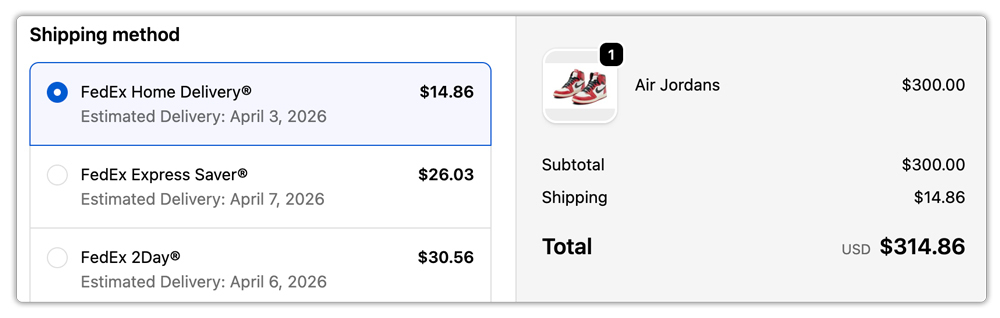
- Show only selected rates for commercial addresses or residential addresses
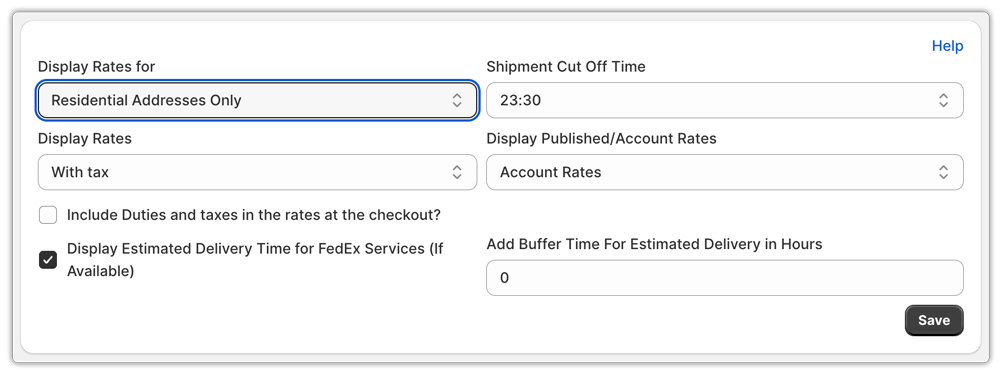
- Control which FedEx services appear at checkout
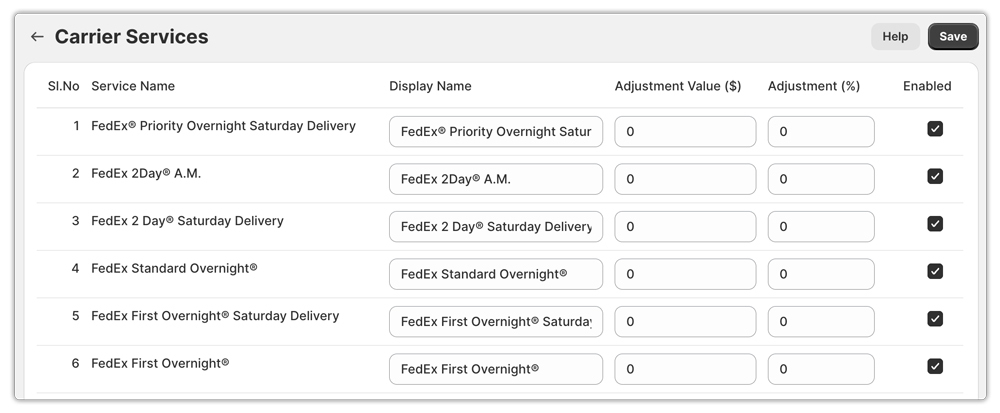
- Reduce pricing confusion for customers
The app also gives merchants flexibility when FedEx API address validation does not classify an address correctly.
Manual Address Classification Option
If automatic validation is unclear, you can manually classify an address as:
- Residential
- Commercial
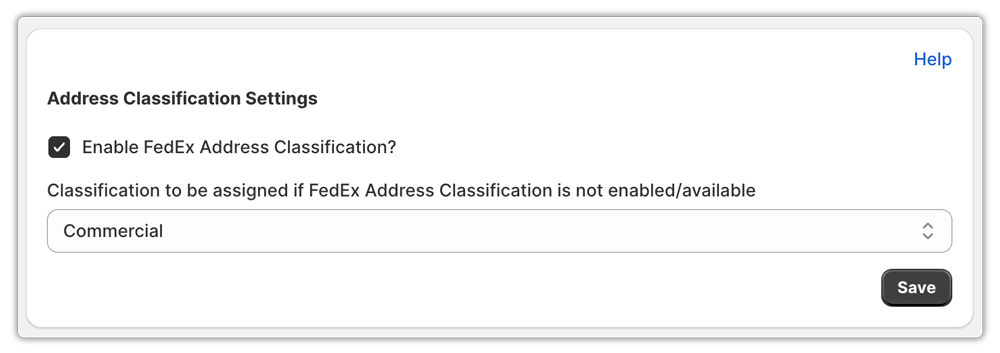
This ensures FedEx applies residential delivery pricing correctly before label generation, reducing billing adjustments later.
Best FedEx Service Choice Based on Customer Type
Choosing the right FedEx service often depends on who your customers are and where most of your orders are going.
Residential E-commerce Orders
If most of your orders are shipped directly to customers’ homes, FedEx Home Delivery is usually the better fit. It is designed for residential shipments and supports deliveries throughout the week, including many weekend routes, which makes it ideal for typical e-commerce fulfillment.
B2B Commercial Shipments
For business deliveries, FedEx Ground is often the more practical option. Offices, retail stores, and warehouses usually receive shipments during standard business hours, so commercial routes are more efficient and often cost less than residential delivery services.
Mixed-Order Stores
For stores shipping to both homes and businesses, the best approach is to let live carrier rates decide which service appears at checkout. This helps customers see the most accurate rate based on their address while ensuring merchants do not overpay or undercharge on different order types.
Conclusion
For Shopify merchants, residential and commercial addresses can result in very different FedEx shipping costs, even when the package itself remains the same. Residential deliveries usually cost more because of added surcharges and delivery complexity, while commercial shipments often qualify for lower ground rates.
Using live FedEx rates in Shopify helps keep checkout pricing accurate, and tools like PH Ship, Rate & Track for FedEx make it easier to manage both address types correctly. A proper setup helps merchants avoid billing surprises and protect shipping margins.
FAQ’s
Q. What does residential delivery mean for FedEx?
For FedEx, residential delivery means a shipment is going to a home address rather than a business location. This includes houses, apartments, condominiums, and other private residences. When an address is classified as residential, FedEx usually applies FedEx Home Delivery or another eligible residential service, along with a residential delivery surcharge, because home deliveries typically require more individual stops and additional route handling.
Q. What is the earliest FedEx will deliver residential?
For FedEx residential shipments, deliveries typically begin as early as 8:00 a.m. Local delivery times depend on the service selected and the destination route. Standard residential deliveries usually continue until 8:00 p.m., including Saturdays and Sundays for eligible home deliveries. Expedited FedEx services such as Priority Overnight or First Overnight may arrive earlier, depending on the service commitment.
Q. Why does FedEx charge more for residential delivery?
FedEx charges more for residential delivery because home shipments usually require individual stops, which makes delivery less efficient than business routes. At commercial locations, carriers often deliver multiple packages in a single stop, while residential addresses typically receive one package per delivery. Because of that added operational cost, FedEx applies a residential surcharge to shipments going to homes or private residences.
