


Shipping internationally comes with a lot of moving parts – carrier charges, customs requirements, duties, taxes, and unexpected fees that can affect your final costs. For WooCommerce sellers shipping into Europe, even small changes in import-related charges can impact profit margins and how customers perceive shipping costs at checkout. With FedEx updating its international fee structure in 2026, businesses selling across borders may need to review how they calculate landed costs and handle import charges.
In this article, we’ll look at what’s changing in FedEx Import Fees, why it matters for e-commerce cross-border sellers, and what businesses can do to prepare.
Table of Contents
- What’s Changing With FedEx’s EU Import Fees
- Why This Matters for Cross-Border Sellers
- Where These Fees Quietly Hurt Margins for E-Commerce Shops
- How to Protect Margin and WooCommerce/Shopify Checkout Trust
- Conclusion
- FAQs
What’s Changing With FedEx’s EU Import Fees
FedEx confirmed both updates on its rate-change page and in its 2026 surcharge and fee changes document, dated June 22, 2026:
- Disbursement fee increase (July 20, 2026): The fee FedEx charges for advancing duties and taxes on a shipper’s behalf rises from “$15 or 2%, whichever is greater” to “$17.50 or 2.5%, whichever is greater.”
- Inbound processing fee extended to EU shipments (August 3, 2026): Previously more limited in scope, this fee now applies to shipments destined for EU member states, with intra-EU shipments specifically excluded.
Together, these mean shipments into the EU carry a higher disbursement cost and a newly applicable processing fee — both of which typically surface after a shipment is already in transit, often as a surprise line item.
Why This Matters for Cross-Border Sellers
For any ecommerce store shipping into Europe via FedEx — whether it’s built on WooCommerce, Shopify, Magento, BigCommerce, or another platform — these fees affect three areas at once:
- Landed cost accuracy: If your pricing or DDP (Delivered Duty Paid) calculations were based on the old disbursement fee structure, they’re now understated.
- Duty collection workflows: The extended inbound processing fee changes what FedEx bills for handling customs on EU-bound parcels, which matters for anyone reconciling carrier invoices against expected costs.
- Checkout messaging: Customers in the EU need accurate expectations about what they’ll owe, whether that’s built into the price (DDP) or collected on delivery (DDU). Fee changes that aren’t reflected in checkout copy can lead to disputes, refused deliveries, or negative reviews.
Because these updates land within two weeks of each other, it’s worth treating them as one combined recalculation rather than two separate, smaller adjustments.
Where These Fees Quietly Hurt Margins for E-Commerce Shops
The risk isn’t the fee itself — it’s the lag between when FedEx applies it and when a store notices. Common failure points include:
- Static landed-cost tools that haven’t been updated with the new $17.50/2.5% disbursement structure.
- DDP pricing built months ago, before the inbound processing fee applied to EU destinations, now under-collecting from customers.
- Customer support tickets from EU buyers confused by unexpected charges, which cost time even if the fee itself is legitimate.
Each of these is a margin or trust problem that compounds with order volume — a few dollars per EU order missed across hundreds of monthly shipments adds up fast.
How to Protect Margin and E-Commerce Checkout Trust
Regardless of platform, the most direct fix is making sure your store quotes and prints FedEx labels using current, live rates rather than cached pricing tables.
WooCommerce Stores:
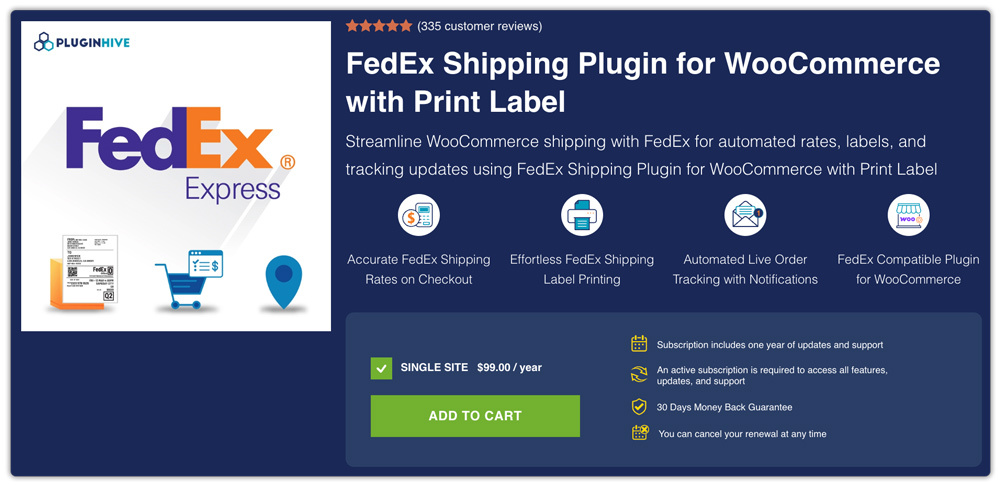
Woo stores shipping via FedEx, the WooCommerce FedEx Shipping Plugin with Print Label connects directly to FedEx’s rate API, so checkout costs and label pricing reflect the carrier’s actual current fee structure — including surcharges like the disbursement and inbound processing fees — instead of a manually maintained rate sheet.
Shopify Stores:
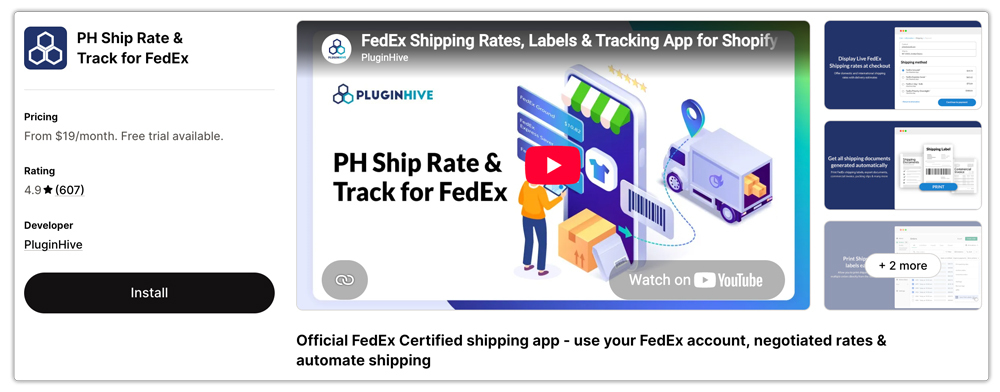
For stores that mainly ship with FedEx, the Shopify PH Ship, Rate & Track for FedEx App is a suitable option to manage FedEx shipping directly from Shopify. It helps display live FedEx rates, generate shipping labels, and track shipments within the store admin.
If your store uses FedEx along with multiple carriers and needs more flexibility for carrier selection, rate comparison, and shipping workflows, you can consider the Shopify Multi-Carrier Shipping Label App. It supports FedEx along with other carriers, allowing merchants to manage different shipping options from a single platform
Beyond automating the rate pull itself, a few manual checks are worth doing before July 20 and August 3, 2026:
- Re-run landed cost estimates for your top EU destinations
- Update DDP pricing if you collect duties upfront
- Add or refresh checkout copy that sets clear expectations about potential import fees for EU buyers
Conclusion
FedEx’s disbursement fee increase and the extension of its inbound processing fee to EU shipments are landing close together in mid-2026, and both directly affect what it actually costs to ship into Europe. Ecommerce sellers who rely on live FedEx rate data — rather than periodically updated manual rate tables — are in the best position to absorb these changes without a margin surprise or a spike in customer confusion at checkout.
If you need help connecting FedEx shipping with your WooCommerce, Shopify, Magento, or BigCommerce store, you can contact PluginHive support for assistance.
FAQs
Q. When do FedEx import fees to EU changes take effect?
The FedEx disbursement fee increase takes effect on July 20, 2026, and the inbound processing fee extension for EU-bound shipments takes effect on August 3, 2026.
Q. What is FedEx’s disbursement fee?
FedEx’s disbursement fee is a charge applied when FedEx pays duties, taxes, or other import charges on behalf of the shipper or recipient during customs clearance.
Q. What is the best FedEx shipping plugin for WooCommerce?
The WooCommerce FedEx Shipping Plugin with Print Label is a suitable option for WooCommerce stores that need live FedEx rates, shipping label generation, and shipment tracking directly from WooCommerce.
Q. What is the best FedEx shipping app for Shopify?
The Shopify PH Ship, Rate & Track for FedEx App is a suitable choice for Shopify stores that want to display live FedEx rates, print FedEx shipping labels, and track shipments from the Shopify dashboard.
Q. What if I need multiple carriers along with FedEx in my WooCommerce store?
If you use FedEx along with carriers like UPS, USPS, or DHL, a multiple carrier shipping solution such as Multi-Carrier Shipping Plugin for WooCommerce can help manage it.
Q. Can I show, hide, or adjust shipping rates based on customer location or other conditions in WooCommerce?
Yes. You can control shipping methods based on conditions like shipping zones, customer location, cart value, or product details. The PH Hide Shipping Methods & Rate Adjustment for WooCommerce plugin helps hide or display specific shipping options based on your store’s shipping rules.
