


Shipping from the UK to customers in the EU often involves more than just postage costs. Depending on the shipment, customers may need to pay a Royal Mail custom charge, which can include import VAT, customs duty, or other import-related fees before their order is delivered.
For WooCommerce store owners, understanding how Royal Mail customs works is important to avoid delivery delays and unexpected charges for customers. In this guide, we’ll explain how EU customs duty rates affect your shipments and how you can manage international orders more efficiently in WooCommerce.
Table of Contents
- What Is a Royal Mail Custom Charge?
- Understanding EU Customs Duty Rates for WooCommerce Orders
- How Royal Mail Custom Charges Affect Your WooCommerce Store
- Ways to Reduce Customs Confusion for Your WooCommerce Customers
- Adding EU Customs Duty to Royal Mail Rates in WooCommerce
- Conclusion
- FAQs
What Is a Royal Mail Custom Charge?
A Royal Mail custom charge is a fee collected on behalf of customs authorities when a parcel enters another country. It typically covers:
- Import VAT – tax on the value of the goods
- Customs duty – a charge based on the type of product and its value
- Handling fee – a small admin fee charged by Royal Mail or its overseas delivery partner for processing the customs paperwork
If a parcel’s declared details don’t line up with what customs expects, it can get held at the border. That’s usually when customers get a surprise charge notice or a delayed delivery.
Understanding EU Customs Duty Rates for WooCommerce Orders
Until 30 June 2026, most parcels entering the EU with an intrinsic value of up to €150 were exempt from customs duty, although import VAT could still apply. From 1 July 2026, the EU removed this customs duty exemption as part of its customs reform, introducing a temporary duty on eligible low-value imports.
Here’s a simplified breakdown of how duty rates currently apply:
| Situation | What Applies |
|---|---|
| B2C parcel under €150, seller uses IOSS | Flat €3 duty per product type (per HS6 tariff line) |
| B2C parcel under €150, seller not using IOSS | Standard customs duty rate based on tariff classification |
| B2C or B2B parcel over €150 | Standard customs duty, same as before |
| B2B shipment to a VAT-registered business | Standard duty rates, not the flat rate |
A few points worth remembering:
- Customs authorities charge the €3 flat duty for each product category, not per parcel. An order with a t-shirt, a belt, and sunglasses generates three separate charges.
- “Value” here means the intrinsic value of the goods only – not shipping, insurance, or taxes shown separately on the invoice.
- This flat-rate system is temporary. The EU is working toward a fully classification-based duty system by around 2028.
Because these are genuinely new rules, it’s worth reviewing how your store communicates potential duty charges to EU customers, since assumptions based on the old €150 exemption no longer hold.
How Royal Mail Custom Charges Affect Your WooCommerce Store
For WooCommerce stores shipping to the EU, unclear customs handling usually shows up as:
- Refused or abandoned parcels – customers decline delivery when they weren’t expecting a charge
- Support tickets and refund requests – confused customers reach out asking why they were charged
- Delays at customs – incomplete or vague declarations hold up clearance
- Negative reviews – customers often blame the store, even when the charge is legitimate
The common thread is usually the same: the customer wasn’t told in advance that duty might apply.
Ways to Reduce Customs Confusion for Your WooCommerce Customers
You can’t remove customs duty – it’s a government requirement but you can reduce friction around it.
1. Set clear expectations at checkout
Add a short note on your shipping or checkout page letting EU customers know that customs duty may apply on delivery, depending on their country’s rules.
2. Decide between DDP and DAP
- DDP (Delivered Duty Paid): You collect duty upfront, so the customer isn’t charged on delivery. Smoother experience, but you need to account for duty in your pricing or checkout.
- DAP (Delivered At Place): The customer pays duty when the parcel arrives. Simpler for you, but can lead to refused parcels if the customer wasn’t expecting it.
3. Show the duty as part of the shipping cost, not a surprise at the door
Where possible, factor expected duty into what the customer sees at checkout rather than leaving it to be collected later. This is the single biggest lever for reducing refused parcels and support tickets.
Adding EU Customs Duty to Royal Mail Rates in WooCommerce
If you’re using Royal Mail or Parcelforce for your EU shipments, the PH Royal Mail Shipping with Tracking plugin for WooCommerce has a dedicated EU Customs Duty setting that helps with exactly the DDP approach above.
Here’s what it does:
- Adds a configurable duty surcharge to Royal Mail and Parcelforce checkout rates, for eligible EU orders under a value threshold you set
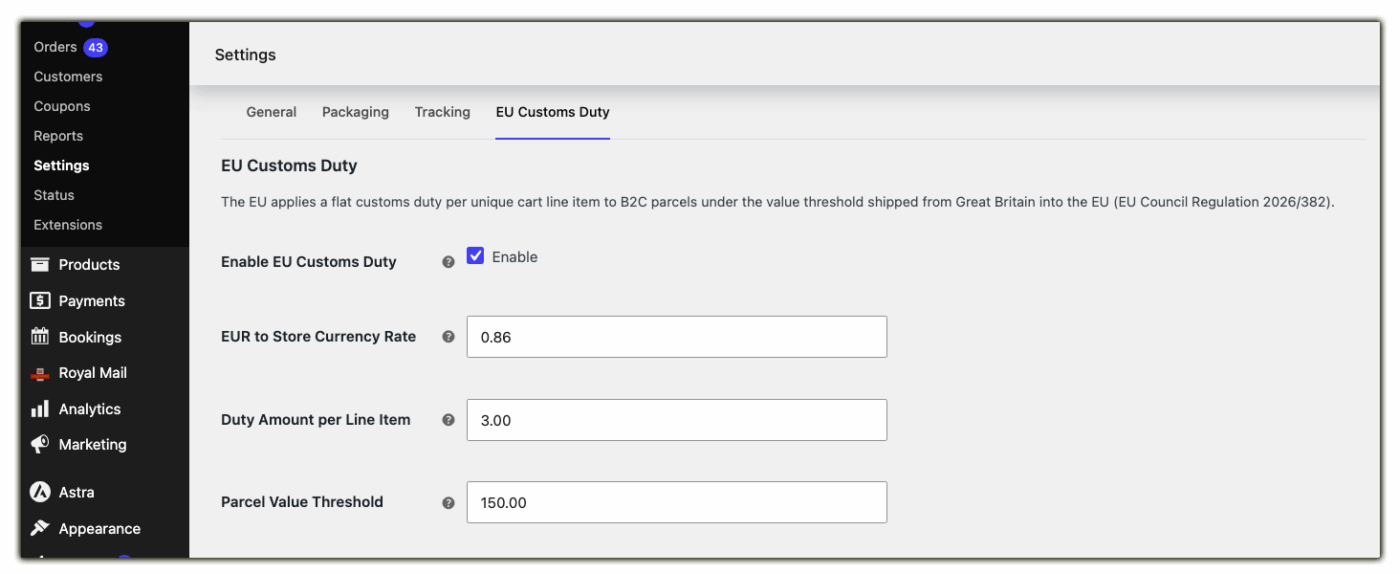
- Lets you exempt certain customer roles (for example, wholesale or B2B customers) or specific countries from the surcharge
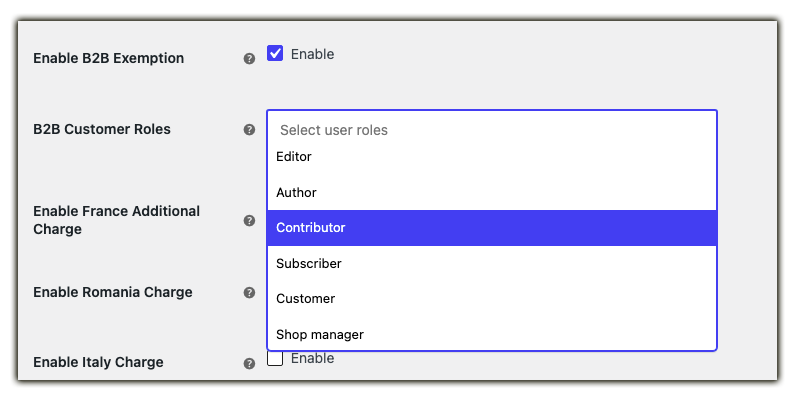

- Supports extra charges for France, Italy, and Romania, where additional local costs can apply
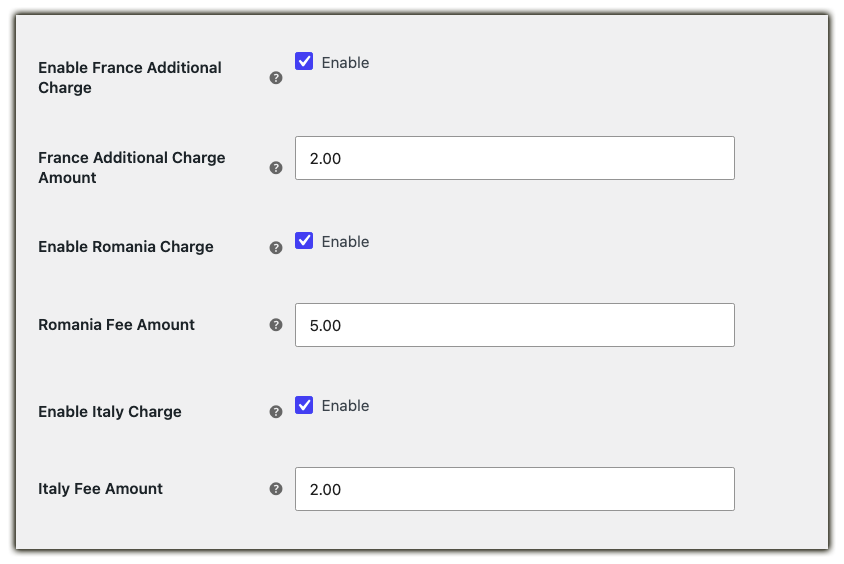
- Calculates the surcharge correctly across multi-package orders, so it isn’t duplicated or missed when a cart splits into more than one parcel
Here’s what this looks like at checkout:
Once you’ve configured the EU Customs Duty settings, add an eligible product to the cart and proceed to checkout.
- Before enabling the feature, customers see standard Royal Mail shipping rates for the selected service.
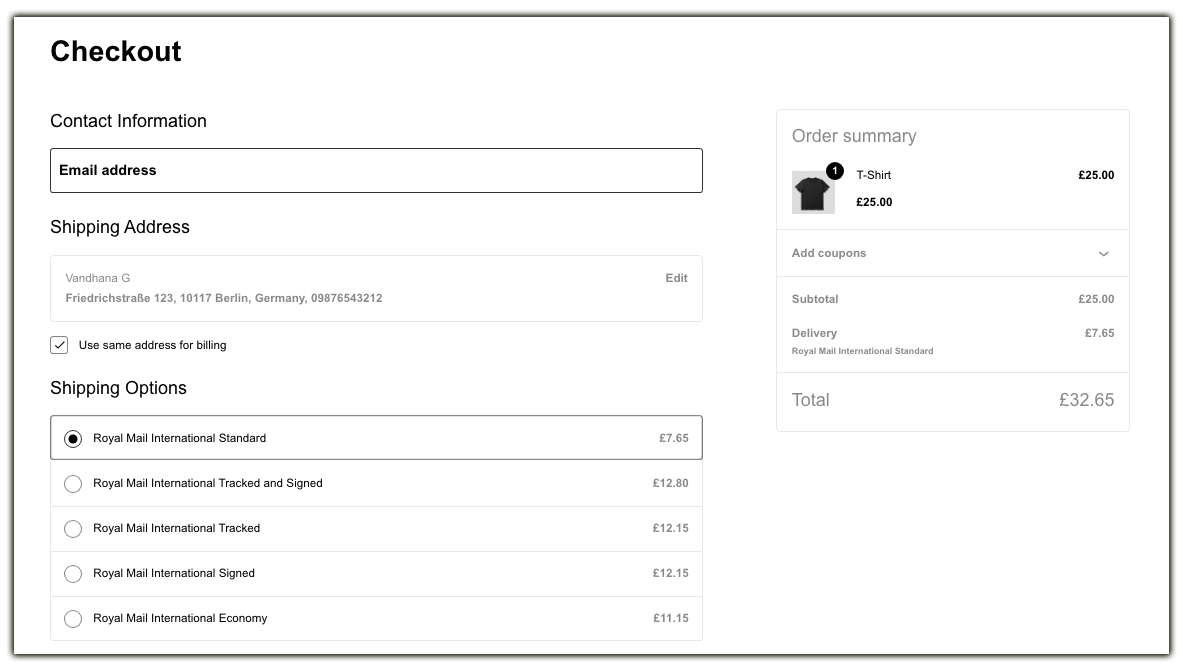
- After enabling it, the configured surcharge is added to eligible Royal Mail or Parcelforce rates. If Show Duty in Rate Label is on, the surcharge also appears in the shipping method label, so customers can see it’s already included.
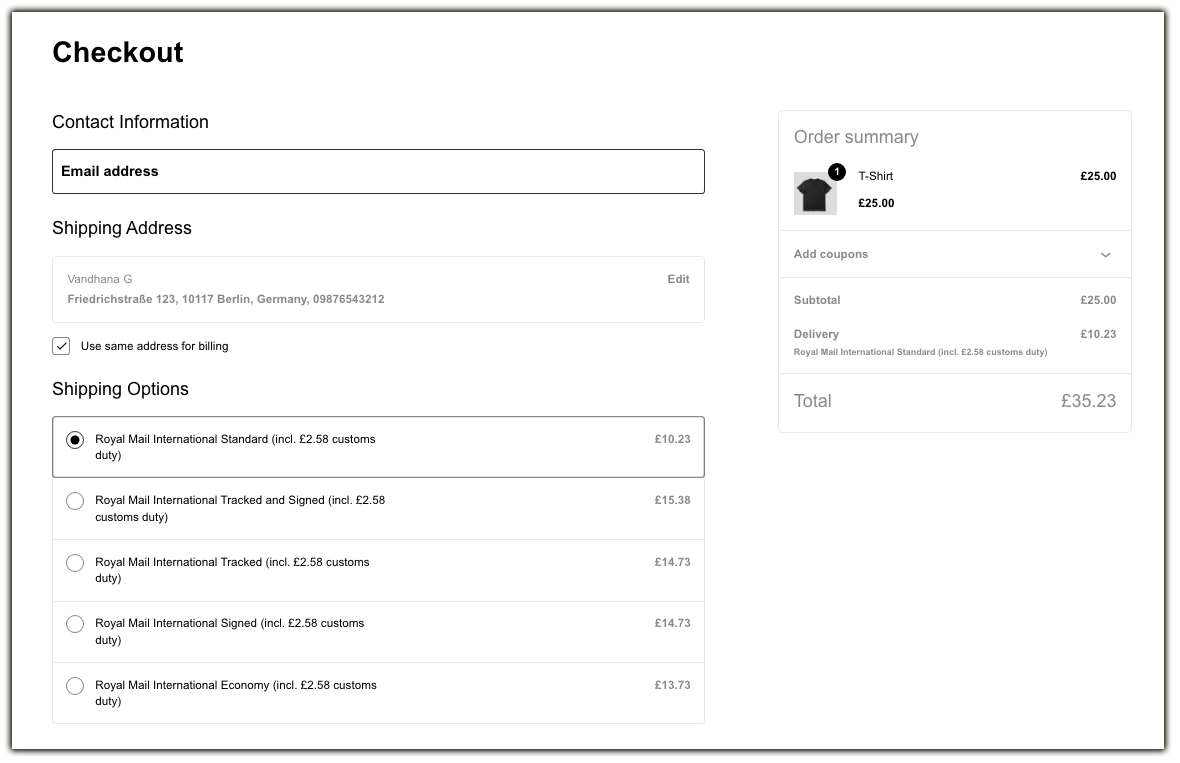
Instead of surprising customers with customs charges after their parcel arrives, this feature lets you include an estimated duty amount in the shipping cost shown at checkout, making international shipping charges more transparent.
To get started, you can configure the plugin using the Royal Mail Shipping with Tracking for WooCommerce setup guide, which covers Royal Mail services, shipping rates, packaging options, and other shipping settings.
Conclusion
Royal Mail customs charges are a normal part of shipping orders from the UK to the EU. By keeping customers informed about possible import charges and including estimated customs duty in your shipping rates where appropriate, you can reduce surprises and create a smoother delivery experience.
If you use the PH Royal Mail Shipping with Tracking plugin for WooCommerce, its EU Customs Duty feature can help you add an estimated duty surcharge to eligible shipments at checkout. For help configuring the feature, you can also reach out to the PluginHive support team.
FAQs
1. Do I have to pay customs charges for Royal Mail?
Customs charges apply based on the destination country’s rules, not on Royal Mail itself. If your parcel is going to the EU (or another country outside the UK), the recipient may owe import VAT and/or customs duty, depending on the value and type of goods.
2. What is Royal Mail’s Postal Delivered Duties Paid (PDDP) service?
PDDP is a Royal Mail service where VAT and customs duty are calculated and collected upfront at checkout, instead of being billed to the customer on delivery. Royal Mail handles paying these charges to the overseas customs authority, so the recipient isn’t charged again at the door.
3. How long does Royal Mail take to deliver after customs clearance?
Once a parcel clears customs, it usually rejoins the normal delivery timeline for the destination country. Delays typically happen before clearance for example, if a declaration is incomplete rather than after.
4. What are EU import duties?
EU import duties are charges applied to goods entering the EU from outside it, based on the type and value of the goods. They’re separate from import VAT, which applies more broadly regardless of value.
5. How is the customs duty applied in practice?
For eligible low-value parcels, a simplified duty amount may apply per product type in the parcel, based on its customs classification. Rates and thresholds are set by EU regulation and reviewed periodically, so it’s best to check current guidance for exact figures.
