


Canada and the U.S. have both revised their tariff rules on each other’s goods within the same month. Canada’s new counter-tariff surtax took effect September 8, 2026; the U.S. revised the scope of its Section 338 tariffs effective September 15, 2026; and further U.S. import bans on Canadian goods took effect September 29, 2026. This guide breaks down the confirmed changes, what’s covered, and how WooCommerce merchants shipping between the U.S. and Canada can prepare.
On This Page
- Timeline of the September 2026 Changes
- Canada’s New Surtax Order (Effective Sept 8)
- US Section 338 Scope Changes (Effective Sept 15)
- US Import Bans on Canadian Goods (Effective Sept 29)
- What This Means for WooCommerce Merchants
- How to Prepare Your WooCommerce Store
- Conclusion
- FAQs
Timeline of the September 2026 Changes
| Date | What Happened |
|---|---|
| Sept. 8, 2026 | Canada’s United States Surtax Order (2026) took effect, adding 15%, 25%, and 50% surtaxes on specified U.S.-origin goods, under CBSA Customs Notice 26-23 |
| Sept. 15, 2026 | Revised scope of the U.S. Section 338 tariffs took effect, changing which Canadian products carry the 50% additional duty |
| Sept. 29, 2026 | U.S. import bans on certain Canadian alcohol and dairy products (previously covered by the 50% Section 338 tariffs) take effect |
Canada’s New Surtax Order (Effective Sept 8)
Canada’s United States Surtax Order (2026) applies a surtax of 15%, 25%, or 50% depending on the tariff item, on U.S.-origin goods, covering roughly $27.6 billion in U.S. imports. The surtax is administered by the CBSA and applies to sectors including:
- Steel and dairy
- Appliances and cooking appliances
- Agricultural equipment
- Pulp and paper, and electronics
- Seafood, beauty/personal care, and clothing
A few details matter for shippers:
- The surtax applies only to goods that meet CUSMA marking rules for U.S. origin. Non-CUSMA-qualifying U.S. goods risk being hit by both the ordinary duty and the surtax.
- Goods that were already in transit on September 8 are exempt, provided shipment documentation supports the transit date.
- Existing counter-tariffs and remission orders (such as those covering steel) remain in place alongside the new surtax.
US Section 338 Scope Changes (Effective Sept 15)
The U.S. didn’t just add new products to its 50% Section 338 tariff; it reshuffled the list. Some notable changes:
Motor Vehicle basket
- Added: paper and paperboard, aluminium and metal products, furniture
- Removed: fishing rods and parts, salt, Portland cement, toilet paper and tissues, refined lead, switchgear assemblies
Alcohol basket
- Added: 34 new products (23 of them cheese lines), plus modified fats and oils, hides and leather, motorboats
- Removed: bulk whisky and bulk liqueurs above four litres (bourbon and rye remain covered)
On the customs coding side, HTSUS provisions 9903.03.12, 9903.03.13, and 9903.03.14 remain the operative Section 338 duty codes at 50% ad valorem, with 122 new HTS lines added and several removed. Only goods classified under 9903.03.13 can claim the 0% exception code 9903.03.15.
US Import Bans on Canadian Goods (Effective Sept 29)
Because Canada maintained its discrimination against U.S. commerce on alcohol and dairy, the U.S. is imposing outright import bans, not just tariffs, on certain Canadian alcohol and dairy products that were previously subject to the 50% Section 338 tariffs. This is a step beyond a duty: once the ban takes effect, banned products cannot legally enter the U.S. at all, regardless of tariff payment.
What This Means for WooCommerce Merchants
Most small and mid-sized WooCommerce stores shipping cross-border aren’t tracking Chapter 99 tariff codes daily, but three things from this round of changes are likely to affect regular stores:
- Product classifications can change mid-season. A product that was uncovered in August can be newly covered in September, or the reverse. Static shipping rules built around last month’s tariff list can quietly become wrong.
- USMCA/CUSMA status doesn’t exempt goods from Section 338. These tariffs apply to all covered goods regardless of USMCA-originating status, so relying on a certificate of origin alone won’t protect against this specific duty.
- De minimis relief looks different on each side. CUSMA maintains a de minimis threshold of CAD $150 for duties and CAD $40 for taxes on qualifying courier shipments from the U.S., but this applies only to courier shipments, not mail. On the U.S.-bound side, the U.S. de minimis exemption has been suspended since 2025, so there is no duty-free entry for any commercial parcel under $800.
- Stores shipping products newly added to a US Canada tariff basket (cheese, furniture, aluminum goods, ATVs, etc.) should expect landed costs on those SKUs to shift.
How to Prepare Your WooCommerce Store
You can stay ahead of these changes by using shipping plugins that pull live rates and generate accurate customs documentation directly from Canada Post, instead of relying on flat rates or manually maintained tariff assumptions.
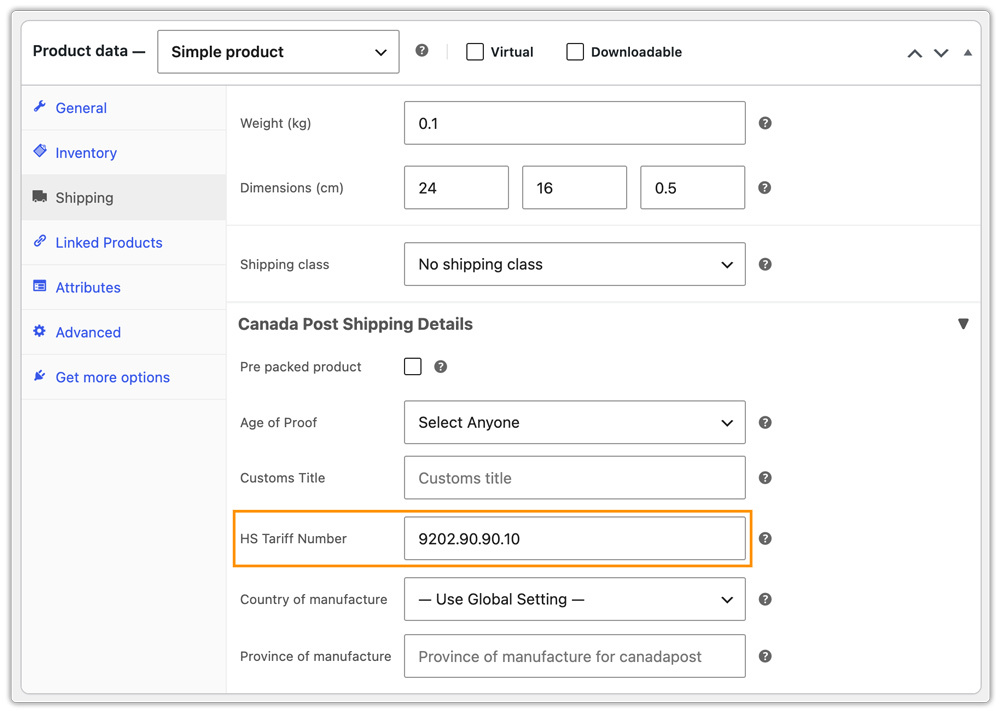
The Canada Post Shipping Plugin for WooCommerce with Print Label is useful here because it lets you enter the HS Tariff Number and Country of Manufacture at the product level, so the customs forms and commercial invoices generated for each shipment reflect accurate classification, which matters more than usual right now, since Section 338 duty exposure depends on correct product classification rather than USMCA status.
The plugin can help you:
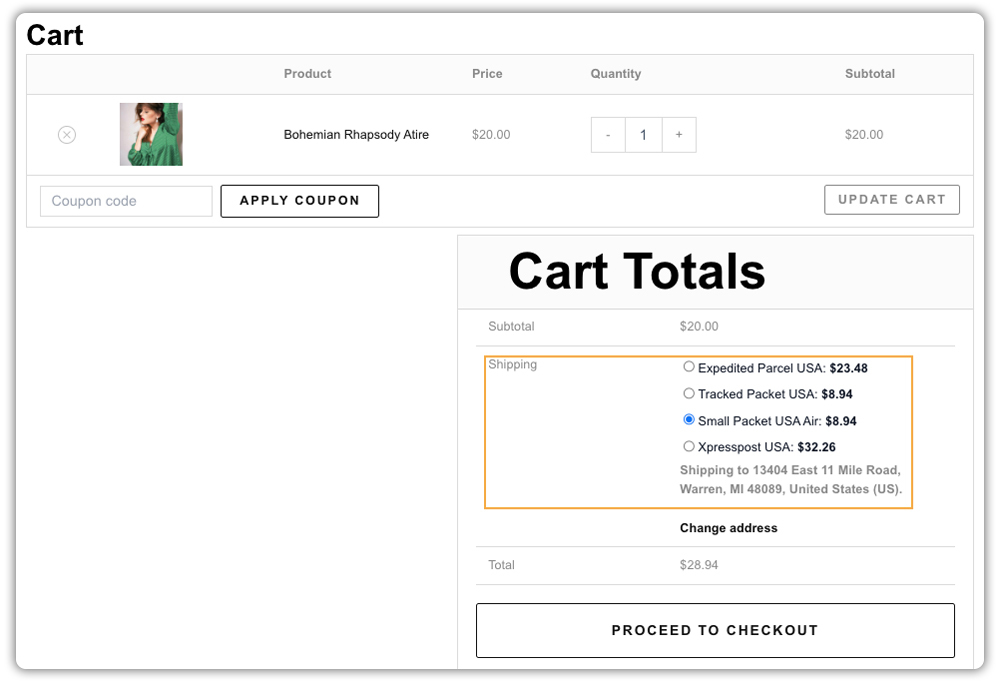
- Display real-time Canada Post rates (domestic, USA, and international) at WooCommerce checkout
- Enter HS Tariff Codes and Country of Manufacture at the product level for accurate customs forms
- Generate and print shipping labels and commercial invoices directly from WooCommerce orders

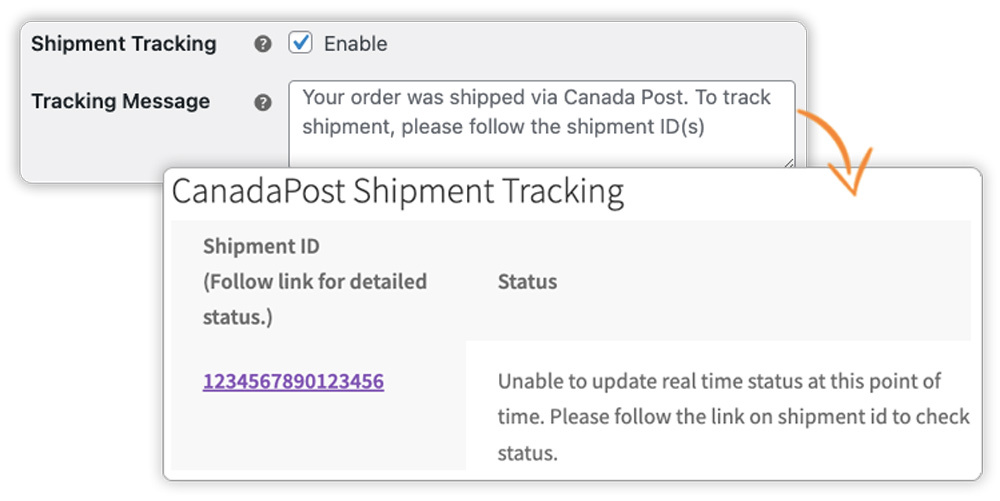
- Track Canada Post shipments automatically within WooCommerce
If you’re shipping via multiple carriers across the border, FedEx, UPS, USPS, or Canada Post, the Multi-Carrier Shipping Plugin for WooCommerce lets you display live rates from several carriers at once, so customers (and you) can compare which option absorbs the new surtax burden best on a given route.
For stores that want to build in cost buffers for tariff-affected SKUs rather than relying purely on live carrier rates, the PH Table Rate Shipping Pro Plugin for WooCommerce lets you set custom shipping rules based on weight, destination, quantity, or order value.
Conclusion
Canada’s new surtax, the revised U.S. Section 338 scope, and the upcoming import bans aren’t a single event; they’re a fast-moving trade dispute that both governments are actively adjusting month to month. For cross-border WooCommerce sellers, that means shipping and customs data needs to stay at least as current as the news. Real-time rates, accurate HS classification, and up-to-date customs documentation matter more in a stretch like this than in calmer trade periods.
If you need help choosing or configuring a WooCommerce shipping solution for cross-border orders, reach out to the PluginHive support team for assistance.
FAQs
Q. Can US-Canada tariff changes affect the shipping cost shown at WooCommerce checkout?
Yes. Changes in duties and customs requirements can increase the landed cost of cross-border orders. Stores should review shipping rules and rates regularly.
Q. Should WooCommerce stores show delivery estimates for cross-border orders?
Yes. Showing estimated delivery dates on product pages, cart pages, and checkout can help customers understand when their orders are expected to arrive. The Estimated Delivery Date Plugin for WooCommerce can help stores display delivery estimates based on their shipping setup.
Q. Can WooCommerce stores hide shipping methods for certain products or destinations?
Yes. Stores can hide specific shipping methods based on products, destinations, cart contents, or other conditions. The PH Hide Shipping Methods & Rate Adjustment for WooCommerce plugin lets merchants create rules to control which shipping methods appear at checkout.
Q. Can shipping methods be different for products from different vendors?
Yes. Multi-vendor WooCommerce stores can apply different shipping rules based on the vendor, products, destination, or other order conditions. The PH Multi Vendor Shipping Addon for WooCommerce helps store owners configure shipping methods separately for different vendors.
Q. Do WooCommerce stores need to update product customs information when tariff classifications change?
Yes. Merchants should review HS tariff codes and country-of-origin information when products move into or out of tariff coverage. Accurate customs information helps ensure the required shipping documentation reflects the product correctly.
