


If your WooCommerce store relies on a USMCA/CUSMA certificate of origin to avoid duties on cross-border shipments, it’s worth knowing exactly where that protection stops. Section 338 tariffs are a specific case where USMCA-qualifying status does not apply, and getting this wrong can mean an inaccurate landed-cost estimate for your customers. This guide explains what USMCA/CUSMA covers, why Section 338 is the exception, and what it means for your WooCommerce store’s shipping setup.
On This Page
- What USMCA/CUSMA Is
- What Is Excluded From Section 338 (and What Isn’t)
- What This Means for WooCommerce Merchants
- How to Prepare Your WooCommerce Store for Section 338 Compliance
- Conclusion
- FAQs
What USMCA/CUSMA Is?
USMCA (United States-Mexico-Canada Agreement), called CUSMA (Canada-United States-Mexico Agreement) in Canada, is the trade agreement that replaced NAFTA between the United States, Mexico, and Canada. It establishes negotiated rules of origin that determine whether a product “originates” in one of the three countries and allows originating goods to move between them largely duty-free.
Why USMCA/CUSMA Normally Exempts Goods From Tariffs
For most tariff actions, a valid USMCA/CUSMA certificate of origin is exactly the protection merchants expect. Under most previous U.S. tariff actions, a valid certificate of origin has generally provided an exemption. That’s why cross-border WooCommerce sellers usually build their compliance workflow around getting the certificate of origin right first.
Why Section 338 Tariffs Are Different
Section 338 breaks that pattern by design. These tariffs apply to all covered goods regardless of whether a product qualifies as originating under USMCA, a clear departure from earlier tariff measures where a valid certificate of origin generally exempted a shipment. The White House has confirmed this directly: the Section 338 tariffs apply to all covered goods regardless of USMCA-originating status, and apply in addition to any Section 232 tariffs.
In practical terms: USMCA/CUSMA paperwork can still reduce or eliminate the ordinary customs duty on a product, but it does nothing against the additional 50% Section 338 duty, because Chapter 99 additional duties follow their own separate rules with no origination exemption built in.
What Is Excluded From Section 338 (and What Isn’t)
| Excluded from Section 338 | Not Excluded (common misconception) |
|---|---|
| Energy, potash, fish, critical minerals | USMCA/CUSMA-qualifying goods |
| Civil aircraft & parts (WTO Civil Aircraft Agreement) | Goods with a valid certificate of origin |
| Canadian-origin goods already subject to Section 232 tariffs (autos, steel, aluminum, copper, lumber, etc.) | Goods shipped by a “trusted” or established cross-border route |
The exclusions that exist are based on which other tariff regime already covers the product, not on USMCA-originating status. Origin still matters, just differently than merchants often expect: the tariff is based on where a product actually originates, so a Canadian-origin product routed through a third country is still covered by Section 338.
What This Means for WooCommerce Merchants
If your WooCommerce store’s compliance check currently stops at “is this USMCA-qualifying?”, that check answers the wrong question for Section 338 exposure. The two things that actually determine exposure are:
- Is the product Canadian-origin?
- Is it currently listed on the Section 338 tariff annex, or already covered by Section 232?
USMCA/CUSMA documentation answers neither of these questions. A product may appear “exempt” on paper because it qualifies under USMCA, while the 50% Section 338 duty still applies to it in practice.
How to Prepare Your WooCommerce Store for Section 338 Compliance
Getting HS/HTS classification right at the point of label generation matters more than usual here, since Section 338 exposure depends on accurate product classification rather than a certificate of origin.
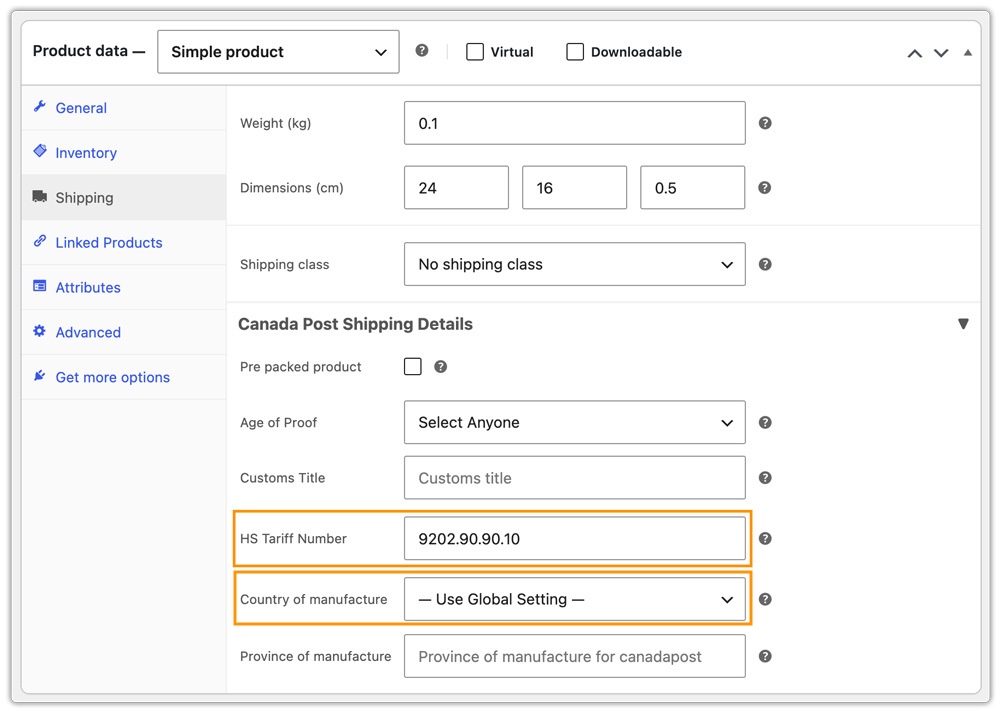
The Canada Post Shipping Plugin for WooCommerce with Print Label lets you enter the HS Tariff Number and Country/Province of Manufacture directly at the product level in WooCommerce, so the commercial invoices and customs forms generated for each order reflect the classification that actually determines duty exposure, rather than relying on a USMCA certificate that doesn’t apply to this tariff.
The plugin can help you:
- Enter HS Tariff Codes and Country of Manufacture per product (or per variation) so customs paperwork is generated correctly.
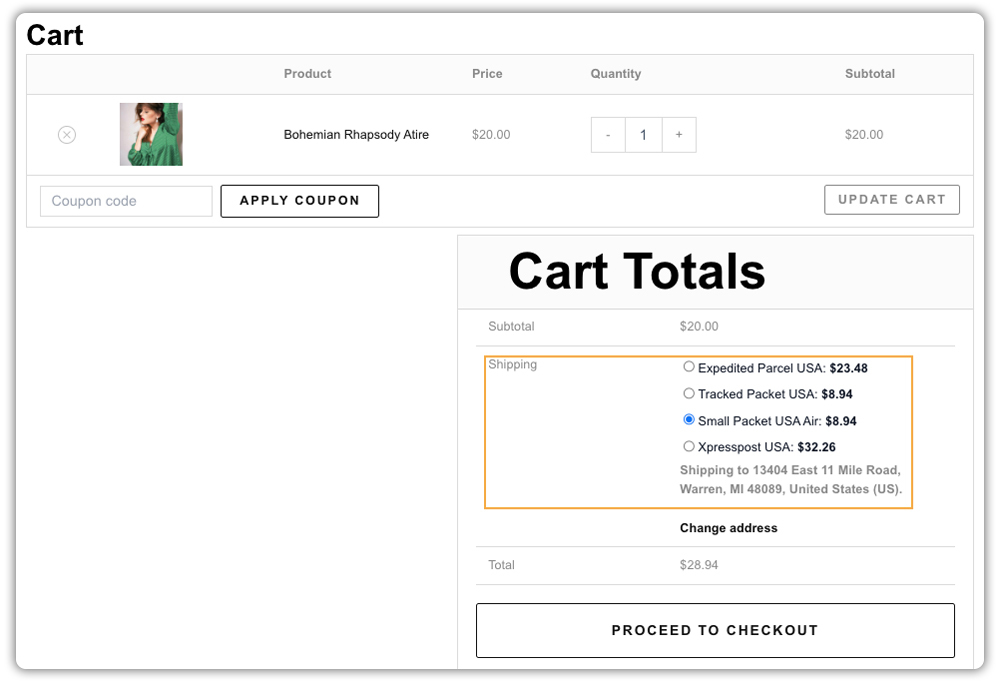
- Display live Canada Post rates for domestic, USA, and international shipments at WooCommerce checkout.
- Generate customs forms and commercial invoices automatically from WooCommerce orders, without a separate Canada Post portal login.

If you also ship via FedEx or UPS on routes affected by Section 338, the FedEx Shipping Plugin for WooCommerce with Print Label and UPS Shipping Plugin for WooCommerce with Print Label offer similar product-level customs data fields, or you can compare rates across all of them at once with the Multi-Carrier Shipping Plugin for WooCommerce.
To set realistic delivery expectations in your WooCommerce store while customs processing adjusts to the new tariff scope, the Estimated Delivery Date Plugin for WooCommerce can help display accurate delivery windows to customers rather than a generic estimate.
Conclusion
USMCA/CUSMA is still one of the most useful tools a cross-border WooCommerce seller has; it just isn’t a universal exemption. Section 338 is the clearest example of where it stops working. Knowing exactly where that line sits, and making sure your WooCommerce product-level customs data reflects it, is the difference between an accurate landed-cost estimate and an unpleasant surprise at the border.
If you need help setting up HS codes or cross-border shipping rates in WooCommerce, reach out to PluginHive support for assistance.
FAQs
Q. If my product has a valid USMCA certificate of origin, is it exempt from Section 338?
No. The Section 338 duty applies regardless of whether a good qualifies as USMCA-originating. A certificate that reduces the ordinary duty does nothing against this specific tariff.
Q. Does routing a Canadian-origin product through a third country avoid Section 338?
No. The tariff is based on where the product actually originates, so a Canadian-origin good is still covered even if it’s routed through another country before entering the U.S.
Q. Can I generate customs documents directly from WooCommerce?
Yes. Depending on the shipping carrier and plugin you use, WooCommerce can generate customs forms and commercial invoices using information stored with the order and products.
Q. What product information should WooCommerce merchants keep updated for international shipping?
Keep the product weight, dimensions, HS tariff code, and country of manufacture accurate. These details can affect shipping rates, customs documentation, and how a shipment is processed at the border.
