


If you sell your time, space, or services, you know how quickly manual scheduling turns into an operational bottleneck. One customer calls to check if Saturday is open, another emails for the exact same slot, and by the time you reply, the opportunity is lost or, worse, double-booked. Factor in the daily hassle of updating spreadsheets by hand and chasing down payments, and managing your calendar ends up consuming the time you should be spending actually running your business.
WooCommerce bookings solve this instantly by turning your website into a 24/7 automated reservation system. Customers can independently view your real-time availability, select their desired time slot, and pay upfront, while the system automatically blocks that schedule to prevent overlapping orders. In this article, we will break down exactly how WooCommerce bookings work, which business models benefit the most, and how the Bookings and Appointments for WooCommerce plugin eliminates manual effort so you can focus on growth.
Table of Contents
- How WooCommerce Bookings Work
- What Businesses Can Use WooCommerce Bookings?
- How to Start Accepting Bookings on Your WooCommerce Store
- Best Practices for Managing Bookings on WooCommerce
- Conclusion
- FAQs
How WooCommerce Bookings Work
By default, WooCommerce is built to sell products, not schedules. It has no calendar and no way to stop two customers from booking the same time. The Bookings and Appointments for WooCommerce plugin adds these missing pieces to your existing store by turning a regular product into a bookable product.
Here is what the process looks like for your customer:
- They open the bookable product page and see a calendar of available dates or time slots.
- They choose a date or time, along with any options you offer, such as the number of guests.
- The total cost is calculated automatically based on their selection.
- They complete the payment at checkout, just like any other WooCommerce order.
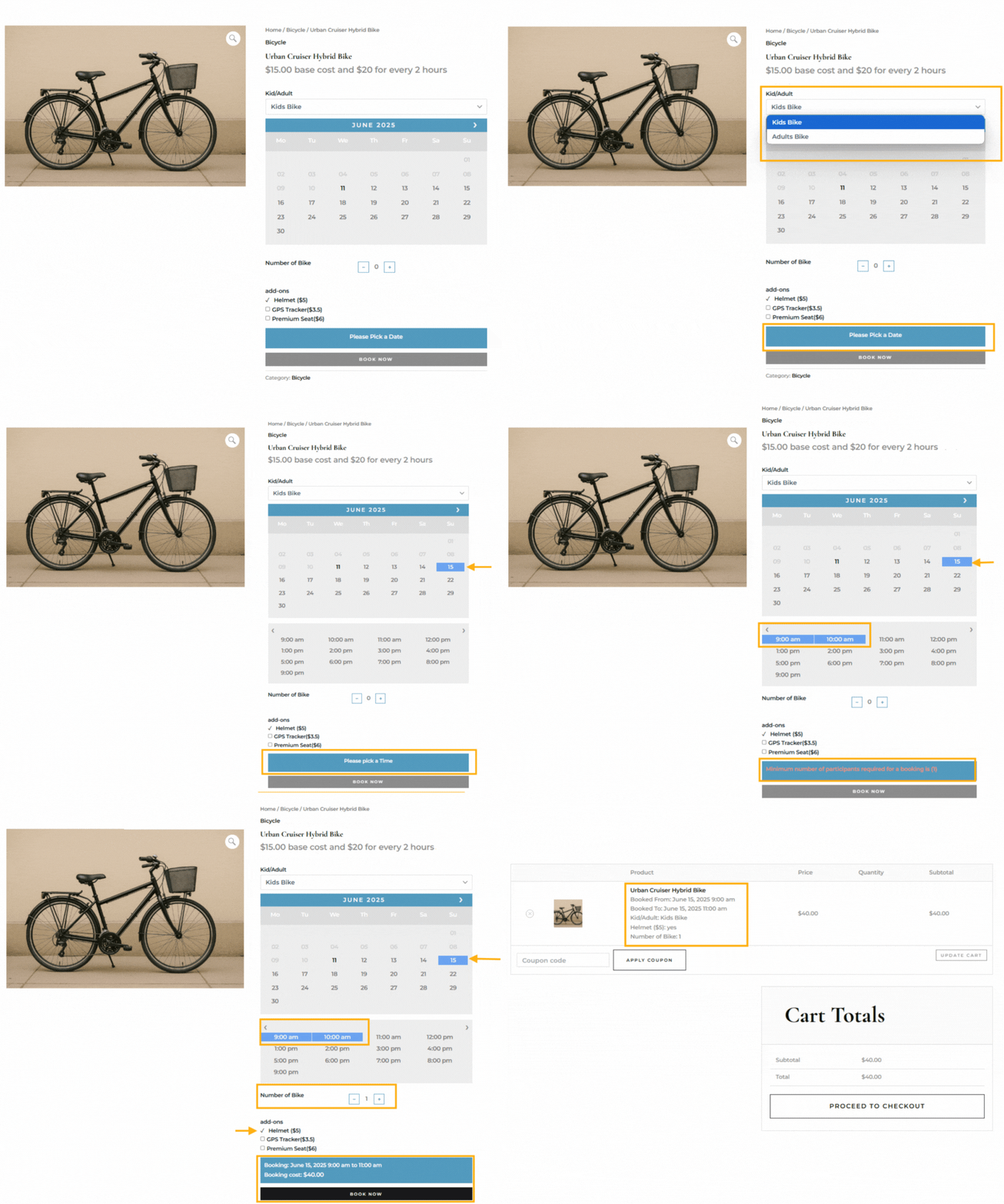
Behind the scenes, the booked slot is blocked for other customers, the booking appears in your dashboard, and email notifications go out. There is no manual work involved on your side.
WooCommerce Bookings vs. Manual Booking Management
Many businesses start by taking bookings over calls, emails, or spreadsheets. It works for a while, but gets harder to manage as bookings grow. Here is how the two approaches compare:
| Manual Booking Management | WooCommerce Bookings | |
|---|---|---|
| Availability | Shared over calls or emails | Customers see open dates and slots on your website |
| Double bookings | Easy to happen when tracking by hand | Booked slots are blocked automatically |
| Payments | Collected separately, often after the booking | Collected at checkout along with the booking |
| Booking hours | Only when you or your team can respond | Customers can book at any time |
| Tracking | Spread across inboxes, notes, and sheets | Managed from one place in your WooCommerce dashboard |
| Your time | Spent on back-and-forth messages | Spent on running your business |
Moving to an automated system saves time and reduces mistakes, which makes it easier to grow without adding more admin work.
What Businesses Can Use WooCommerce Bookings?
If your business sells time, space, or an experience, WooCommerce Bookings can fit it. Here are the most common types:
- Appointment-based services: Clinics, salons, spas, consultants, and tutors can let clients pick a slot online, instead of scheduling everything over the phone.
- Rentals: Car rentals, bikes, boats, vans, and event equipment can be reserved for the exact dates or hours a customer needs. The same goes for private taxi services that take hourly bookings.
- Stays and accommodation: Hotels, hostels, guest houses, and farm stays can take bookings with check-in and check-out dates, reducing paperwork.
- Tours and experiences: Guided tours, museum visits, wine tastings, and workshops with limited spots become easy to schedule and sell.
- Classes and lessons: Music teachers, trainers, and online course providers can offer sessions of any length and sell them as bookings.
- Venues and spaces: Community halls, meeting rooms, sports arenas, and studios can be booked by the hour or by the day.
Whichever category you fall into, the goal is the same: let customers book on their own while you stay in control of your schedule.
How to Start Accepting Bookings on Your WooCommerce Store
Getting started takes only a few steps. Install and activate the Bookings and Appointments for WooCommerce plugin, turn a product into a bookable product, and configure its booking period, availability, and pricing to match your business. If you want to see it in action first, you can also explore the live demo.
To set things up on your store, refer to this setup guide for Bookings and Appointments for WooCommerce, which walks you through every setting step by step. To understand what each of those settings lets you do, here is a look at everything the plugin offers.
What You Can Do with the Bookings And Appointments for WooCommerce Plugin
The Bookings and Appointments for WooCommerce plugin gives you everything you configure during setup, and more. Here is what you can do with it, grouped by purpose.
Booking Types, Durations, and Limits
- Flexible Booking Types: Offer single-day bookings, multi-day reservations, per-night stays with check-in/check-out dates, or exact appointments by the minute or hour.
- Customizable Timeframes: Set booking periods in minutes, hours, days, or months while applying minimum and maximum duration limits for your customers.
- Buffer Time: Automatically add a mandatory gap before or after each booking to accommodate preparation, cleaning, or travel.
- Capacity Management: Define exactly how many simultaneous bookings a single day or specific time slot can accept.

Availability and Scheduling
- Availability Rules: Block specific days, times, or seasons, set a booking window, and stop last-minute bookings.

- Shared Asset Availability: Keep schedules synchronized across multiple products using Booking Assets to ensure shared staff or equipment are never double-booked.

Pricing, Participants, and Extras
- Pricing Rules: Charge different prices for weekends, peak seasons, specific dates, times of the day, or the number of days booked, and offer discounts.

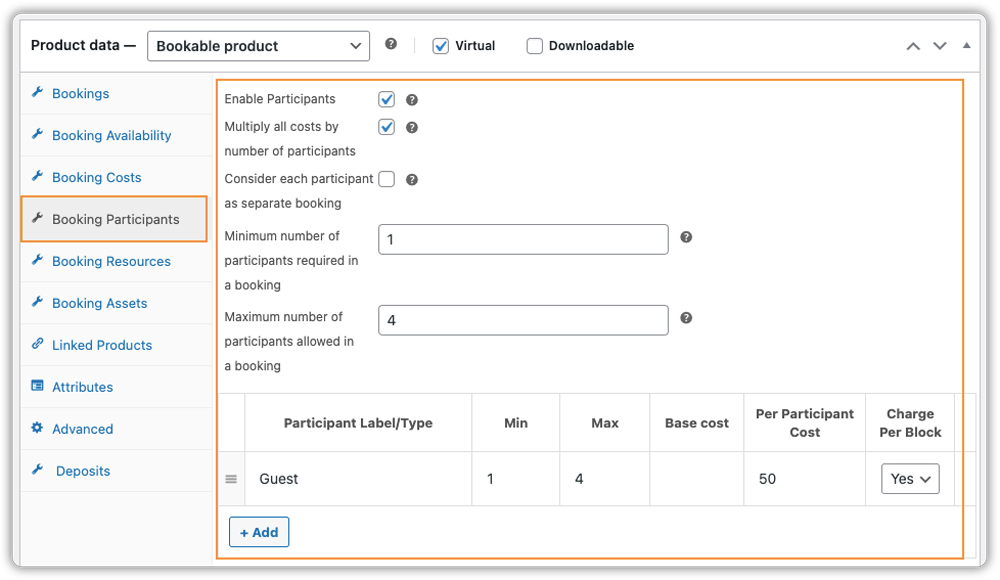
- Participants and Group Bookings: Let customers add the number of guests or people, charge per participant, and decide whether the headcount uses up seats in a slot.
- Resources and Extras: Sell add-ons such as parking or an extra bed with a price for each, assigned automatically or chosen by the customer.

- Custom Booking Form: Collect extra details with a booking notes field, or add more fields using the PH Product Add-ons plugin.
- Payments and Deposits: Accept any payment method supported by WooCommerce, and collect partial payments or security deposits with the PH WooCommerce Deposits plugin.
Booking Management and Notifications
- Approvals and Cancellations: Approve bookings before payment, and allow customers to cancel up to a time limit you set.
- Email Notifications and Reminders: You and your customers get emails for new bookings, confirmations, and cancellations, and customers receive reminders before their booking.

- Booking Management: View all bookings from your dashboard and an admin calendar, add bookings manually for customers who call or walk in, and export bookings to CSV.
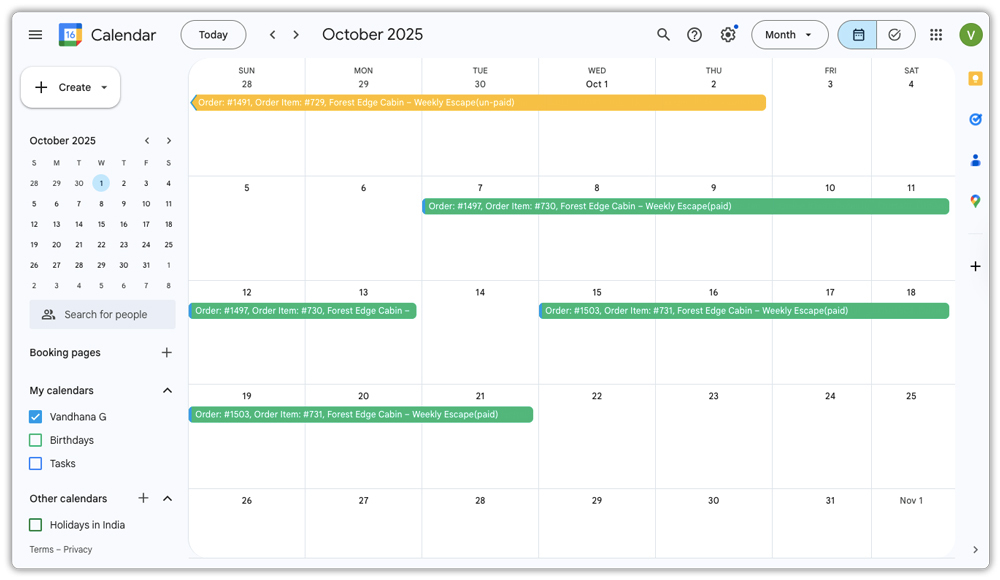
- Calendar Sync: Sync bookings with Google Calendar and Microsoft Outlook, or export them as iCalendar events for Apple Calendar.
Customer Experience
- Calendar Designs: Choose from three mobile-friendly calendar designs to match your store.
- Time Zone Conversion: Show time slots in each customer’s own time zone.
- Availability Search: Let customers search for available bookings instead of browsing product by product.
- Multilingual Support: Run your booking store in multiple languages with WPML and Polylang.

Add-ons to Extend the Plugin
- Recurring Bookings: Use the Recurring Bookings add-on to let customers book repeat sessions.
- Multiple Non-Adjacent Bookings: Use the Multiple Non-Adjacent Bookings add-on to let customers book several separate dates in one order.
- Zoom Meetings: Use the Zoom Integration add-on to host online meetings, classes, and consultations for your bookings.
How These Features Benefit Your Business
Combined, these features completely remove scheduling from your daily workload. Customers can independently check availability, book their preferred slots, and complete payments, while your calendar and confirmations update automatically.
This infrastructure eliminates manual mix-ups, delivers a frictionless experience for your customers, and ensures that increasing your booking volume does not multiply your administrative tasks.
Best Practices for Managing Bookings on WooCommerce
Once your bookings are live, these habits help you keep things running smoothly:
- Start with one service: Set up your simplest or most popular service first, then expand to the rest once you are comfortable.
- Test as a customer: Make a test booking on both desktop and mobile before going live, so you catch any issues before customers do.
- Write clear product descriptions: Mention what is included, how long the booking lasts, and where to arrive, so customers know exactly what to expect.
- Share your policies upfront: State your cancellation and rescheduling terms on the product page to avoid disputes later.
- Review your booking data: Look at past bookings to spot your busiest days and slowest periods, and plan your offers and staffing around them.
- Keep everything updated: Update WooCommerce, WordPress, and your bookings plugin regularly to stay compatible and secure.
Following these habits keeps your operations organized and your customers coming back.
Conclusion
WooCommerce bookings take the manual work out of scheduling. Customers book and pay on their own, you avoid double bookings, and your time goes back to running your business. Whether you rent out equipment, run appointments, or host tours, the right plugin makes it easier to grow.
With flexible booking types, availability and pricing rules, staff management, and calendar sync, Bookings and Appointments for WooCommerce covers everything a booking business needs in one place. Explore the plugin, try the demo, and if you have any questions, reach out to our support team.
FAQs
Q: What are the advantages of online booking systems?
An online booking system lets customers book and pay at any time, without waiting for a reply. It also prevents double bookings, cuts down manual work such as calls and spreadsheets, and gives you one place to manage all your bookings.
Q: Does WordPress have a booking system?
No, WordPress does not come with a built-in booking system. You can add one with a plugin. If you run a WooCommerce store, a bookings plugin like Bookings and Appointments for WooCommerce turns your products into bookable services, rentals, or stays.
Q: What is the best booking system?
It depends on your business, but a good booking system should let you set your own availability and pricing, accept payments online, and prevent double bookings. If you sell on WooCommerce, Bookings and Appointments for WooCommerce covers all of this inside your existing store, so you don’t need a separate tool.
