


FedEx International Connect Plus for low-AOV cross-border DTC: where service-tier choice changes landed cost
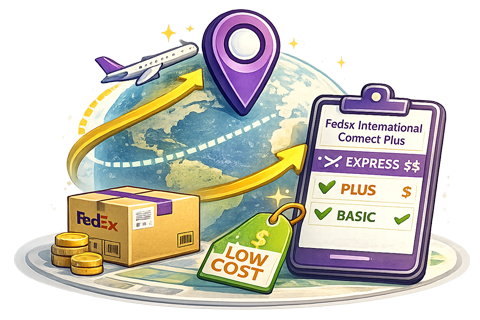
A US-based DTC supplement brand ships $24 monthly subscription boxes to buyers across the EU. Each shipment is operationally simple — same SKU, same packaging, similar weight. The FedEx International Priority quote at checkout comes in higher than the buyer would pay for two months of subscription. The brand absorbs the shipping cost into a subsidized international rate to stay competitive at checkout. Margin on EU subscription orders runs 8-12 percentage points lower than domestic. The shipment economics don’t fit the standard international tiers — the carrier has more options than the integration is calling.
This is the pattern that FedEx International Connect Plus was built for. Low-value DTC, low-AOV cross-border, where Priority and International Economy overprice routes that the carrier could move at a different rate tier optimized for the segment. The carrier capability for this kind of segment-fitted service tier exists. The integration layer is where most merchants either don’t know it’s available or aren’t configured to call the right endpoint.
This article describes what Connect Plus actually offers, where the workflow consistently breaks at the integration layer, and what the integration needs to do for service-tier routing to fit the economics of low-AOV cross-border DTC.
International Connect Plus is positioned as a FedEx service tier designed for higher-volume, lower-value cross-border DTC. The intended segment is brands shipping at meaningful volume where the per-shipment value doesn’t justify International Priority pricing and where transit-time tolerance is greater than Priority but less than International Economy. The service tier sits in that middle position on the price-vs-transit curve.
Important note: Connect Plus specifics — exact eligibility criteria, available origin / destination pairs, current rate positioning, and program-naming details — should be verified against current FedEx Developer (fdx) documentation before any external publication. The carrier’s international service tier portfolio evolves, and the operational specifics referenced here should match current FedEx International product positioning.
What the workflow looks like at the carrier level: eligibility is tied to the merchant’s FedEx account configuration. When the account is enrolled and the service tier is available for the origin / destination pair, the Rate API returns Connect Plus quotes alongside Priority and International Economy. The integration picks the service tier per order based on the merchant’s configured routing rules. The Ship API accepts the Connect Plus service tier the same way it accepts any other international service tier.
Customs documentation, ETD, and international identifier handling work the same way across Connect Plus as across the other international tiers — the difference is in pricing and transit-time positioning, not in the customs workflow underneath.
Three patterns show up consistently across cross-border DTC merchants:
1. Connect Plus eligibility not exposed at the integration level. The merchant has the right FedEx account configuration, the carrier-side eligibility is in place, but the multi-carrier shipping app they’re using defaults to calling Priority and International Economy without checking for Connect Plus eligibility. The merchant doesn’t see Connect Plus quotes at the integration level even though their account would qualify. They default to Priority and absorb the over-pricing into their margin. The fix is the integration explicitly checking the account’s service-tier eligibility and routing eligible orders through Connect Plus when it’s the better economics.
2. Service-tier routing logic doesn’t match the merchant’s shipment profile. Some integrations expose Connect Plus but apply uniform routing — every cross-border order goes through Connect Plus regardless of value or destination. For higher-value B2B shipments where Priority’s transit time matters, this under-serves the operational requirement. The right pattern is routing logic that picks the service tier based on order value, destination eligibility, transit-time preference, and the merchant’s per-order routing rules. Low-AOV consumer DTC → Connect Plus where eligible. Higher-value B2B or time-sensitive flows → Priority. The merchant doesn’t make the per-order decision; the integration does.
3. Account-level eligibility changes not propagated to the integration. Merchants enrolled in Connect Plus through their FedEx account rep, but their integration’s rate-engine cache wasn’t refreshed and continued calling the previous service-tier mix for weeks after enrollment. The carrier-side change happened; the integration-side change didn’t. The merchant didn’t see Connect Plus quotes until the integration’s account configuration was manually refreshed. Production-grade integrations handle this asynchronously — service-tier eligibility changes on the FedEx account propagate to the integration’s rate engine without manual intervention.
These three patterns explain most of the operational gap between Connect Plus enrollment and Connect Plus actually delivering value at the checkout level.
The workflow that doesn’t break checks Connect Plus eligibility at the account level via the Rate API, exposes Connect Plus quotes alongside Priority and International Economy when the service tier is available for the route, and routes orders through the right service tier based on configured rules (order value thresholds, destination eligibility, transit-time tolerance).
For the merchant, the configuration step is one-time at the integration level: enable Connect Plus routing, set the value-and-destination rules for when to prefer it over Priority. The fulfillment team doesn’t make per-order routing decisions. The integration calls the right service tier per order based on what’s eligible and what the merchant’s rules prefer.
For higher-volume cross-border DTC — brands shipping at meaningful EU, ANZ, or AMEA volume where the segment-fitted economics of Connect Plus produce material landed-cost savings — the difference between defaulting to Priority and routing eligible orders correctly compounds across thousands of shipments per month.
The FedEx international service tier portfolio has more depth than most merchants realize. International Priority for time-sensitive flows. International Economy for cost-optimized higher-value cross-border. International Connect Plus for the high-volume low-value DTC segment that doesn’t fit either default. International Connect — the related lower-tier service for specific origin/destination pairs. Specialty service tiers for regulated cargo, temperature-sensitive shipments, and high-value goods.
For mid-market and enterprise cross-border DTC merchants on Shopify and WooCommerce, the service-tier choice often matters more to landed cost than negotiated rate discounts on a single tier. Two merchants with similar negotiated rates but different service-tier routing can have meaningfully different effective landed cost per shipment. The integration layer is where the service-tier routing happens — or doesn’t.
What makes Connect Plus specifically interesting from a partnership-marketing perspective: the segment it serves (higher-volume low-value cross-border DTC) is one of the fastest-growing segments in FedEx’s international product portfolio, and the integration-layer adoption across Shopify and WooCommerce is uneven. Closing that adoption gap is one of the cleaner workflow-level wins available in the cross-border eCommerce conversation.
Cross-border DTC service-tier routing still feels like one of the under-built capability areas across Shopify and WooCommerce shipping infrastructure.
Happy to connect with anyone on the FedEx International / Connect Plus product side exploring DTC service-tier routing automation further.
This article reflects patterns observed across PluginHive’s cross-border DTC merchant base on FedEx. **FedEx International Connect Plus program specifics, eligibility criteria, and naming should be verified against current FedEx Developer (fdx) documentation before publishing this article externally.** Service-tier positioning and origin / destination availability evolve.
PluginHive shipping solutions for FedEx integration on WooCommerce and Shopify.

Direct FedEx integration for WooCommerce — addresses the workflow gaps covered in this article.
Shopify app with native FedEx integration — addresses the workflow gaps covered in this article.
Multi-carrier label generation for Shopify across FedEx and other carriers — addresses the workflow gaps covered in this article.