



If you sell on Shopify and ship to people in the U.S., you’ve probably already seen the impact of the new tariff rules that kicked in at the end of August 2025. For years, merchants relied on the de minimis exemption, which allowed orders under $800 to enter the U.S. without duties or taxes. That is now gone.
As of August 29, 2025, every shipment to the U.S., no matter how small, must go through customs and may face duties ranging from 10% to 50%. What used to be a smooth, low-cost way of reaching American customers has become more expensive and more complicated.
For Shopify merchants, this isn’t just a small policy change; it’s a change that affects pricing and shipping. Lower-value orders that used to pass duty-free are now getting flagged, customers are seeing unexpected costs, and some carriers have even paused services while they adapt to the new rules.
In short, if your store depends on international sales, especially to the U.S, these tariff changes matter. They could affect your margins, your checkout experience, and even whether customers actually buy.
In This Article
- Key Tariff Changes
- Carrier Responses and Shipping Costs
- Impact on Shopify Merchants
- Merchant Strategies for Adapting to Tariff Changes:
- Conclusion
- FAQ’s
Key Tariff Changes
The End of the De Minimis Exemption
- For years, Shopify merchants could count on the de minimis rule, which allowed packages under $800 into the U.S. without any duties or taxes. That made it easy to sell smaller items like clothing, accessories, or gadgets without thinking about extra fees for your customers.
- But as of August 29, 2025, that’s old. Now, no matter how small the order is, every package has to go through customs and may get hit with duties.
New Duty Rates Between 10% and 50%
- On top of removing the exemption, the U.S. rolled out a new duty structure. Instead of going through unnoticed, products now face ad valorem duties, basically, a percentage of the item’s value.
- These can range anywhere from 10% to 50%, depending on what you’re selling and where it’s coming from. For merchants who ship cheap items that used to avoid tariffs, this can feel like a big jump in costs.
- The U.S. has also introduced a formal duty collection system. Carriers now have to choose one of two ways to calculate duties: either charge a percentage of the item’s value (ad valorem, based on the origin country’s tariff rate) or, for the first six months after the rule took effect, apply a flat fee per package. That flat fee ranges from $80 to $200 depending on the country of origin, but after the six-month window closes, only the percentage-based method will remain.
Expanding Beyond China and Hong Kong
- When tariffs first tightened back in 2024, the changes mainly targeted shipments from China and Hong Kong. But in August 2025, the U.S. expanded the rule to cover all countries. That means whether you’re sourcing products from Europe, Canada, Australia, or anywhere else, your shipments are now subject to the same customs process and potential duty charges.
- For Shopify merchants, the bottom line is clear: every U.S. order is now part of the tariff system, and planning ahead for those costs is no longer optional.
Carrier Responses and Shipping Costs
Every major carrier has had to adjust to the new U.S. tariff rules. From extra surcharges to temporary service suspensions, here’s how FedEx, UPS, Australia Post, and Purolator are responding and what it means for Shopify merchants.
FedEx
- FedEx has changed its international shipping processes to align with the new U.S. tariff rules. All shipments must now go through customs clearance, even low-value ones.
- Merchants shipping to the U.S. should expect higher costs per package, along with stricter paperwork requirements to ensure duties and taxes are calculated correctly.
UPS
- UPS has also updated its way for international packages entering the U.S. The carrier is now charging additional fees for duty collection and customs processing, reflecting the fact that every package must be checked, regardless of its value.
- Shopify merchants using UPS can still rely on its global network, but they’ll need to add in these added costs when calculating total landed prices for U.S. buyers.
Australia Post
- Australia Post temporarily suspended deliveries to the U.S. following the tariff changes, since there was no longer a way to move low-value goods duty-free, but they do plan on resuming them on the 25th of September.
- Services are set to start again through approved intermediaries that can properly collect and remit duties at the point of shipment. Until then, Australian Shopify merchants may see delays or need to explore alternative carriers for their U.S.-bound orders.
Purolator
- Purolator is helping Canadian businesses adapt by highlighting strategies to mitigate tariff fallout. These include choosing the right customs clearance options, making use of duty-prepaid services, and optimizing shipping methods to reduce costs.
- For Shopify merchants in Canada, Purolator emphasizes planning ahead and working with logistics partners to avoid unexpected expenses and delays at the border.
Impact on Shopify Merchants
The new tariff rules are reshaping how Shopify stores operate. From higher costs to confused customers, here’s how merchants are being directly affected.
Higher Costs and Slower Shipping
- Every order to the U.S. now requires customs clearance and duty assessment, even those previously exempt under $800.
- Carriers like FedEx and UPS introduced new duty handling and disbursement fees, adding several dollars per shipment.
- Customs backlogs are creating longer transit times, especially for small parcels that previously moved quickly under de minimis rules.
Customer Experience Challenges
- Customers used to duty-free international shopping are now hit with surprise fees before delivery.
- Many face unexpected duty bills of $20–$50+, which can exceed the product price for low-value items.
- This has triggered higher cart abandonment rates and a rise in refund or cancellation requests, especially for gift purchases.
Real-World Examples from Small Businesses
- Shopify and Etsy sellers reported sudden U.S. order cancellations as buyers refused to cover new duties.
- Australian merchants saw U.S. shipments temporarily frozen when Australia Post suspended parcel deliveries, disrupting revenue during peak sales weeks.
- Canadian Shopify stores shipping through Purolator noted extra customs paperwork and prepaid duty requirements, forcing merchants to either raise product prices or absorb part of the cost to retain customer trust.
Merchant Strategies for Adapting to Tariff Changes
Tariffs aren’t going away, but Shopify merchants can take steps to stay ahead. Here are some practical ways to adapt:
Adjust your pricing strategy
- Many merchants are slightly raising prices or rolling shipping and duty costs into the product price.
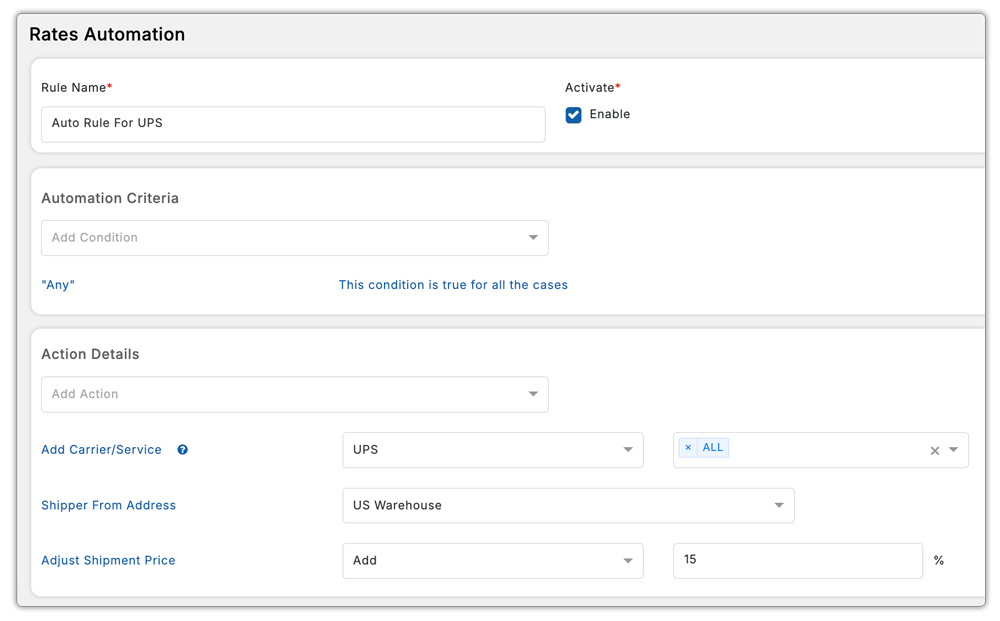
- Using PluginHive MCSL, you can calculate estimated duties at checkout, so you know exactly how much to build into your pricing and avoid undercharging.
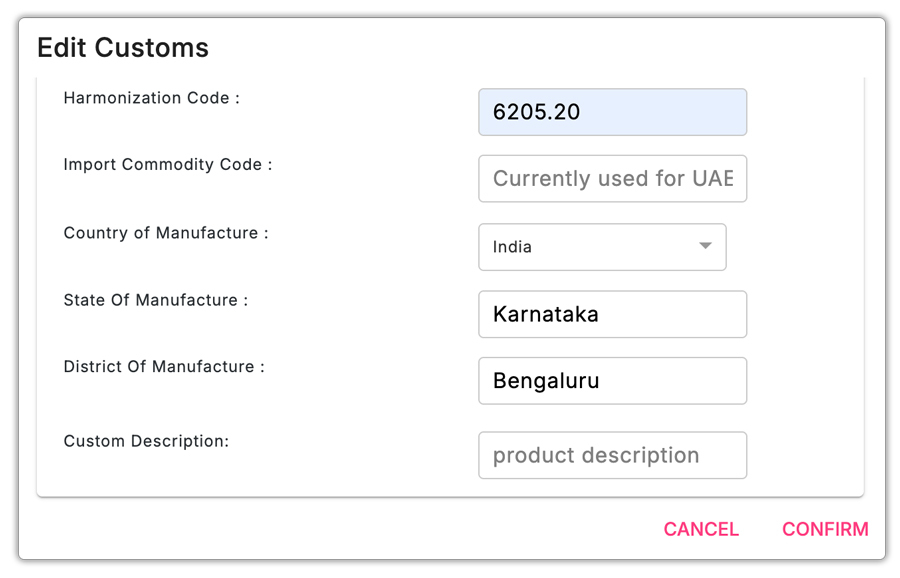
Stay on top of HS codes and country of origin
Every international shipment requires accurate HS codes (Harmonized System codes) and country of origin details. HS codes are globally standardized numbers used to classify products for customs, while the country of origin indicates where the goods were manufactured. Together, these details determine:
- How much duty and tax will your buyers need to pay?
- Whether products are restricted or prohibited in certain countries.
For Shopify merchants, getting HS codes and origin details wrong can lead to overpaying duties, rejected shipments, or lengthy customs holds.
The PH Multi-Carrier Shipping Label app simplifies this by automatically attaching the correct HS codes and origin info to every order, cutting down on errors and customs delays.
Decide between DDP and DDU shipping
- With Delivered Duty Paid (DDP), you cover the duties up front so customers see a clean, all-in price at checkout. With Delivered Duty Unpaid, the customer pays duties when the package arrives.
- The PluginHive MCSL app supports both methods, letting you choose the right approach for each order.

Tighten up shipping paperwork
- Accurate commercial invoices, clear product descriptions, and correct codes make customs clearance smoother and faster.
- The PluginHive MCSL app automatically generates compliant shipping labels and documents, reducing the chance of delays or surprise fees at the border.

Conclusion
The August 2025 U.S. tariff changes had a turning point for Shopify merchants who rely on international sales. What was once a simple, low-cost way of reaching American customers has become a more complex and expensive process, one that requires careful planning around duties, paperwork, and shipping options.
While higher costs and new customer challenges are unavoidable, merchants who stay proactive have a clear advantage. By using tools like the PH Multi-Carrier Shipping Label app to manage HS codes, automate customs paperwork, and offer duty-prepaid options, Shopify sellers can reduce friction and keep customers happy despite the new rules.
At the end of the day, tariffs are now part of the reality of cross-border eCommerce. The merchants who adapt their pricing, shipping, and sourcing strategies will not only protect their margins but also build stronger trust with U.S. buyers in the long run.
FAQ’s
- Will the U.S. tariffs affect online shopping?
Yes. Every international order to the U.S. now goes through customs, often with added duties and fees. Shoppers will see higher prices or surprise charges at delivery, and shipping times may be longer due to extra clearance steps.
- Is Shopify affected by tariffs?
Shopify merchants are directly impacted when shipping to the U.S. All international orders now face customs clearance and potential duties, which affect product pricing, shipping costs, and the overall checkout experience.
- What happened to the U.S. de minimis exemption?
Until August 29, 2025, Shopify merchants could ship orders under $800 into the U.S. without paying duties or taxes, thanks to the de minimis exemption. That rule has now ended. Every package, no matter how small, must clear customs and may be charged duties ranging from 10% to 50%.
