


Packaging plays a crucial role in successful Shopify fulfillment, especially when using Royal Mail for parcel delivery, where size and weight directly impact costs and delivery eligibility. Smart packaging not only protects your items but also helps you fit within Royal Mail’s Large Letter, Small Parcel, or Medium Parcel limits, saving money and avoiding delays.
In this guide, we’ll share practical packaging tips tailored to Royal Mail services and show you how to streamline the entire process with the PH Multi-Carrier Shipping Label app. From automating Royal Mail shipping label generation to displaying accurate rates at checkout and scheduling pickups, the app helps you handle fulfillment with less manual effort and more automation.
In This Article:
- Why Packaging Matters for Royal Mail Shopify Shipments
- General Packaging Guidelines for Royal Mail
- Packaging Tips for Shopify Product Categories
- Restricted and Prohibited Items For Royal Mail
- Using PluginHive to Simplify Royal Mail Packaging:
- Conclusion
- FAQ’s
Why Packaging Matters for Royal Mail Shopify Shipments
1. Impact of Automated Sorting Systems
Royal Mail relies on high-speed automated sorting machines to process thousands of parcels per hour.
- Poorly packaged or irregularly shaped parcels can get stuck, misrouted, or rejected by the system.
- Soft or overfilled packaging may burst during handling or transit.
Tip: Use rigid boxes or envelopes that conform to Royal Mail’s Letter, Large Letter, Small Parcel, or Medium Parcel categories.
2. Risk of Damaged Parcels and Denied Compensation Claims
Royal Mail has clear packaging standards that must be followed to qualify for compensation in cases of loss or damage.
- If a parcel is damaged due to weak or inadequate packaging, compensation claims may be denied.
- Parcels must be packed well enough to withstand drops, stacking pressure, and machine handling.
Tip: Labeling a parcel as “FRAGILE” does not guarantee protection. Proper physical protection is essential.
3. The Role of Packaging in Customer Satisfaction and Brand Trust
Packaging is often the first physical interaction a customer has with your business. It plays a key role in shaping perception and loyalty.
- Secure, well-presented packaging builds trust and improves the customer experience.
- Damaged or unprofessional packaging can lead to returns, complaints, and negative reviews.
Tip: Treat packaging as part of your brand strategy, consider using branded tape, boxes, or sustainable materials.
General Packaging Guidelines for Royal Mail
To help you meet Royal Mail’s standards and avoid common shipping issues, here are the key general packaging guidelines to follow:
- Choose Strong Outer Packaging: Use sturdy, undamaged cardboard boxes or padded envelopes suited to your item’s size and weight. Avoid soft packaging or overfilled mailers that could burst during handling.
- Use Internal Cushioning: Protect contents with bubble wrap, foam, crumpled paper, or similar materials. Items should be cushioned on all sides and prevented from moving around inside the package.
- Use Appropriate Labels: Apply “FRAGILE,” “Do Not Bend,” or “This Way Up” labels if needed. These are helpful, but not a substitute for good packaging.
- Avoid Common Mistakes: Never use string, masking tape, or ribbon. Avoid unsecured contents or exceeding the weight limit of the box. Poor packing can lead to delays, damage, or lost compensation claims
Packaging Tips for Shopify Product Categories
Shipping physical products through Shopify requires packaging that protects the item, enhances the customer experience, and meets Royal Mail’s handling standards. Below are the best practices for common product categories:
1. Apparel & Accessories
- Poly mailers vs. mailer boxes: Use poly mailers for soft items like t-shirts, leggings, or hoodies. They’re lightweight, waterproof, and affordable. Use rigid mailer boxes for premium, delicate, or gift-packaged apparel.
- Moisture resistance and brand presentation: Add tissue paper, branded stickers, or a thank-you card for presentation. Use resealable inner bags for added moisture protection.
2. Electronics (Phones, Tablets, Earbuds)
- Battery handling and cushioning: Use packaging compliant with lithium battery shipping regulations. Devices should be turned off and packed in anti-static bags if possible.
- Preventing accidental activation and movement: Wrap tightly and isolate accessories like chargers or cables. Use strong outer boxes, not padded envelopes, even for small electronics.
3. Art Prints, Canvases & Frames
- Rolling vs. flat packaging: For unframed prints or posters, roll in a heavy-duty tube with end caps. For framed prints or canvases, use flat double-wall boxes with corner protectors and foam wrap.
- Glass protection and labelling: Tape a sheet of cardboard over glass surfaces to prevent shattering. Use “FRAGILE” and “DO NOT BEND” labels.
4. CDs, DVDs, USBs, and Memory Cards
- Custom containers and wrapping: Use snug cardboard mailers with foam inserts or sleeves. CDs and DVDs should be packed in jewel cases and wrapped in bubble wrap.
- Padded envelopes for lightweight shipments: For individual USBs or memory cards, use small padded envelopes or foam-lined mailers.
Restricted and Prohibited Items For Royal Mail
When shipping with Royal Mail, it’s crucial to understand which items are restricted and prohibited. Failing to comply may result in delays, returned parcels, destroyed items, or denied compensation.
1. Common Restricted Categories
You can send some of the following items only under strict packaging and quantity rules:
- Aerosols (e.g, deodorant, spray paint)
- Batteries (especially lithium and loose batteries)
- Perfumes & aftershaves (due to flammability)
2. Risks of Non-Compliance
- Parcels may be seized, destroyed, or returned at your expense
- Royal Mail may refuse compensation for loss or damage
To ensure compliance when shipping with Royal Mail, check the official list of restricted and prohibited items here: Royal Mail Prohibited and Restricted Items Guide .
Using PluginHive to Simplify Royal Mail Packaging
PH Multi-Carrier Shipping Label app offers multiple packing strategies to help Shopify merchants automate packaging selection and checkout using that packaging configuration. Here’s a brief explanation of each method you can choose from in the app:
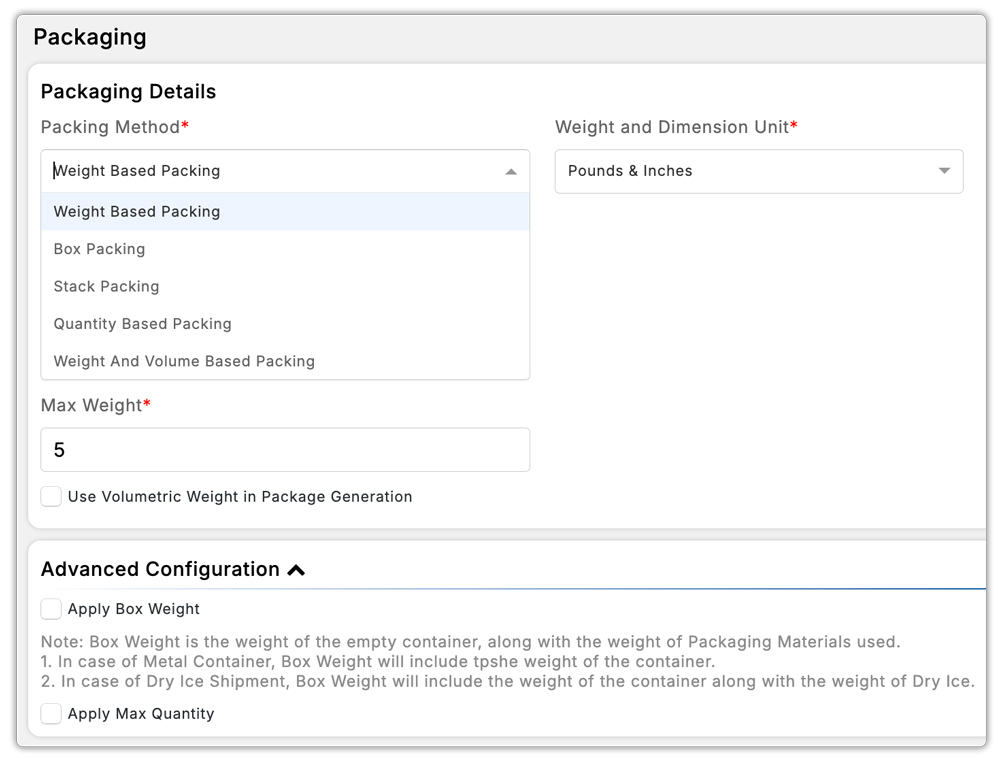
1. Weight-Based Packing
- Pack items based solely on the total order weight
- Best for stores where weight is the main factor influencing packaging, such as apparel or lightweight accessories.
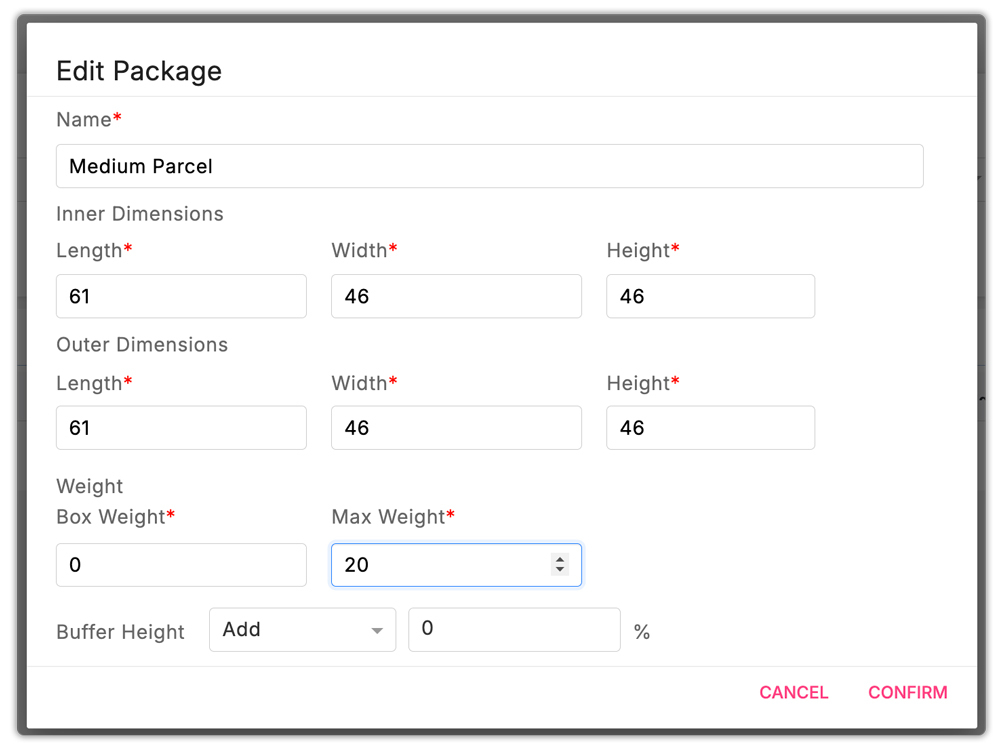
2. Box Packing
- Let you create and define specific box types (e.g., Royal Mail Small Parcel, Large Letter, Medium Parcel).
- Items are packed based on their dimensions and weight, matched to the best-fitting box.
3. Stack Packing
- Packs products stacked one after another, either vertically or horizontally, based on their shape and stacking ability.
- Useful for items like books, posters, flat products, or stacked apparel.
4. Quantity-Based Packing
- Packs items into boxes based on quantity.
- Best for stores with uniform items like CDs, USBs, or boxed products sold in fixed sets.
5. Weight and Volume-Based Packing
- Uses a combined logic of total weight and physical volume to ensure box fit.
- Great for mixed-cart orders where products vary in size and shape.
6. Prepacked Product
PluginHive MCSL also gives you the option to ship products using your own packaging, without combining them with other items.

When the Prepacked setting is enabled for a product, the app uses the product’s saved dimensions as a custom box during packing. This is perfect for items that ship in manufacturer packaging, such as boxed electronics, shoes, or fragile products.
Each pre-packed item is treated as a separate parcel, allowing for more accurate shipping rates and better compliance with Royal Mail’s parcel size limits.

Conclusion
Effective packaging is more than just protection; it’s a vital part of your domestic and international shipping process that influences delivery success, customer satisfaction, and brand perception. By choosing the right materials and following Royal Mail’s specific requirements, you reduce the risk of damage, delays, and denied compensation claims.
Always refer to Royal Mail’s packaging and restricted item guidelines. And don’t treat packaging as a one-time setup. Regularly review your methods and optimize based on product changes or feedback.
Well-packaged parcels not only arrive safely, but they also reflect the care and professionalism of your brand.
FAQ’s
- What are Royal Mail’s rules for restricted and prohibited items?
Items like batteries, aerosols, and perfumes fall under restricted goods. You must follow quantity and packaging rules or risk denied claims or returned parcels. Always refer to the Royal Mail Prohibited and Restricted Items Guide.
- How do I schedule a Royal Mail pickup from Shopify?
Using the PH Multi-Carrier Shipping Label app, you can enable pickup scheduling directly from your dashboard. This saves time by eliminating post office trips and ensures timely Royal Mail collections.
- Which Shopify products are suitable for poly mailers or mailer boxes?
For apparel packaging, soft products like t-shirts can go in poly mailers. Premium or gift-packaged items should use mailer boxes for better brand presentation and protection.
- What is the best packaging type for Royal Mail parcel delivery on Shopify?
Use mailer boxes or padded envelopes that match Royal Mail’s parcel size guidelines (Large Letter, Small Parcel, Medium Parcel). Rigid packaging prevents damage during automated sorting and helps ensure proper parcel delivery.
