


If you run a Shopify store, you’ve likely experienced the frustration of a package going out only to come back. This is called RTO, or Return to Origin, and it’s one of the biggest silent profit killers in eCommerce today.
In this guide, we’ll break down exactly what RTO is, why it happens, how it affects your bottom line, and most importantly, proven strategies to reduce it on your Shopify store.
In This Article:
- What Is RTO (Return to Origin)?
- The Real Cost of RTO for Your Shopify Store
- How to Calculate RTO Rate and Proven Strategies to Reduce RTO on Shopify
- Shipping App To Help Reduce RTO in Shopify
- Key Metrics to Track to Reduce RTO on Shopify
- Conclusion
- FAQ’s
What Is RTO (Return to Origin)?
RTO, or Return to Origin, occurs when a shipment is dispatched from your warehouse or fulfillment center but cannot be delivered to the customer and is sent back to you.
Unlike a customer-initiated return (where the buyer sends back a product they received), an RTO happens before or during delivery. The order never reaches the customer.
Common Reasons an Order Becomes an RTO:
- Customer not available at the delivery address
- An incorrect or incomplete address was provided at checkout
- The customer refused to accept the package
- Cash on Delivery (COD) order, where the customer couldn’t pay
- Failed multiple delivery attempts by the courier
- Phone number unreachable for delivery coordination
The Real Cost of RTO for Your Shopify Store
Many store owners underestimate how expensive RTO really is. It’s not just the cost of shipping forward that you’re paying twice.
| Cost Type | What It Actually Costs You |
|---|---|
| Forward Shipping | You pay the full courier fee to dispatch the order, money spent before the customer even sees the package |
| Return Shipping | The courier charges again to bring the package back, you’re billed twice for a sale that never happened |
| Packaging & Labor | Staff time spent picking, packing, and labeling is gone forever, plus more hours to receive, inspect, and restock the return |
| Product Damage | Items rehandled across multiple transit legs are far more likely to arrive back damaged or unsellable |
| Restocking Costs | Returned inventory needs to be checked, re-labeled, and put back into stock, adding hidden operational overhead |
| Lost Revenue | The sale doesn’t close, cash flow takes a hit, and in most cases, the customer has already moved on |
| COD Charges | Couriers charge a COD handling fee on both legs; you owe it even when the customer refuses, and you collect nothing |
On average, an RTO can cost you 2–3x more than the original shipping cost. For a store shipping 1,000 orders a month with a 15% RTO rate, that’s 150 orders lost and thousands of dollars down the drain every single month.
How to Calculate RTO Rate and Proven Strategies to Reduce RTO on Shopify
How to Calculate Your RTO Rate:
RTO Rate (%) = (Total RTO Orders ÷ Total Shipped Orders) × 100
For example, if you shipped 500 orders and 60 came back, your RTO rate is 12%.
Track this metric monthly in your Shopify admin. If your RTO rate is above 5% for prepaid orders or above 15% for COD orders, it’s time to take action.
Proven Strategies to Reduce RTO on Shopify
There’s no single magic fix for RTO; it’s a combination of small, deliberate improvements across your checkout.
Verify Orders Before You Ship
This one is especially important for COD orders. A surprising number of RTOs happen because the customer placed an order impulsively and was never really committed to receiving it. A quick verification step before dispatch acts as a filter for customers who aren’t serious, tend to ignore or decline the confirmation, saving you the cost of shipping an order that was never going to be accepted. The most common verification methods are:
- WhatsApp or SMS: a message with order details asking for a quick confirmation reply
- Email Confirmation: a simple email asking the customer to verify their address and intent
Fix the Address Problem at Checkout
Incorrect or incomplete addresses are one of the most common and preventable causes of RTO.
- Make the phone number field mandatory at checkout
- Use a PIN code validator to check delivery serviceability before the order is placed
Make Prepaid More Attractive Than COD
COD orders fail at a significantly higher rate than prepaid ones; that’s just the reality of eCommerce.
- Prepaid Discount: offer 5–10% off for customers who pay online
- COD Surcharge: add a small handling fee to make online payment feel like the obvious choice
Keep Customers Informed Every Step of the Way
A huge proportion of missed deliveries comes down to one simple thing: the customer didn’t know the package was coming. Life gets busy, people forget they placed an order, and the delivery agent shows up at an empty house.
- Send a “Your order is out for delivery today” email on the day of dispatch
- Share a real-time tracking link via email
Shipping App To Help Reduce RTO in Shopify
One of the most effective tools Shopify store owners can use to tackle RTO is the PH MultiCarrier Shipping Label app by PluginHive. Rather than juggling multiple shipping platforms, it brings everything under one roof directly inside your Shopify dashboard.
- Smart Carrier Selection: The PH MultiCarrier Shipping Label app gives the option to select the most suitable carrier for each order based on pincode and cost, reducing failed deliveries caused by poor courier coverage. It supports global carriers like FedEx, UPS, DHL, and USPS.

- Real-Time Tracking & Customer Notifications: The app automatically attaches a tracking number to every order and sends live delivery updates to customers via email, keeping buyers informed and reducing missed deliveries.

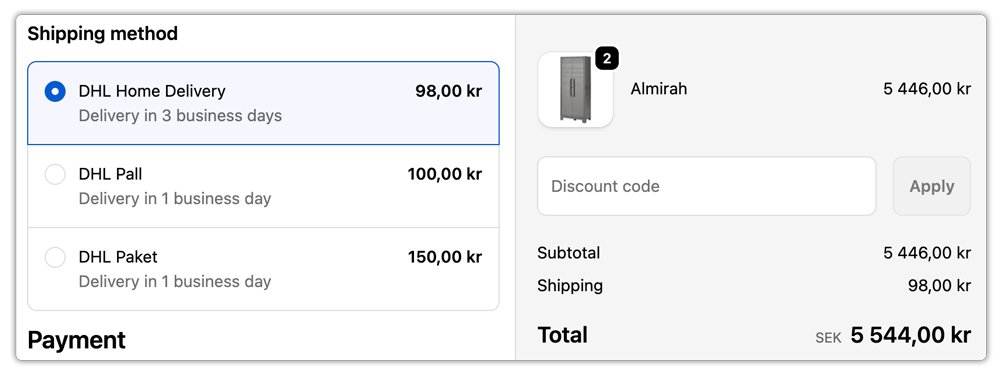
- Accurate Rates at Checkout: Displays real-time, carrier-calculated shipping rates at checkout. This transparency reduces impulsive COD orders and nudges customers toward prepaid, which has a significantly lower RTO rate.
- Centralised Tracking Dashboard: Monitor all shipments from within Shopify in one place. Spot stalled or at-risk deliveries early and take action before a package gets returned.

Key Metrics to Track to Reduce RTO on Shopify
Reducing RTO isn’t a one-time fix; it’s an ongoing process. And like any process you want to improve, you have to measure it. These are the numbers worth watching regularly:
- Overall RTO Rate: Calculate it every month without fail: Total RTOs ÷ Total Shipments. If it’s trending up, something in your process has changed and needs attention. If it’s trending down, what you’re doing is working.
- COD RTO Rate vs Prepaid RTO Rate: Always track these separately. Lumping them together masks where the real problem is. If your prepaid RTO rate is low but your COD rate is high, the fix is very different than if both are elevated. Knowing which one is driving your overall number tells you exactly where to focus.
- RTO Rate by Courier: One of the most overlooked aspects for Shopify store owners. If one courier is responsible for a disproportionate share of your RTOs, that’s not bad luck; that’s a data point. Either address it with them directly or route fewer orders their way.
- RTO Rate by Area: Helps you pinpoint problematic pincodes or regions. Some areas consistently have higher refusal or missed delivery rates. Once you know which ones, you can adjust your COD availability, add extra verification steps, or choose a better-performing courier for those zones specifically.
- First-Attempt Delivery Rate: The clearest indicator of how well your entire pre-shipment process is working. Address accuracy, order verification, courier selection, and customer communication all feed into this number. The higher it is, the lower your Shopify store’s RTO rate will be.
Conclusion
RTO will never be zero, that’s just the nature of eCommerce. Packages get misdelivered, customers change their minds, and addresses get typed wrong. But the difference between a store that bleeds money on returns and one that keeps RTO in check comes down to how seriously you treat it as a business problem.
The good news is that most RTOs are preventable. A verification step here, a better checkout experience there, the right courier for the right pincode, none of these are complicated changes, but together they add up to a meaningfully lower RTO rate and a healthier bottom line.
Start by calculating your current RTO rate. Pick two or three strategies from this guide and put them in place this week. Use a tool like the PH MultiCarrier Shipping Label app to automate the parts that don’t need to be manual. Track your numbers monthly and keep iterating.
RTO is a solvable problem. The stores that treat it that way are the ones that grow faster, spend less on logistics, and keep more of every rupee they earn.
FAQ’s
Q. What is the RTO process in logistics?
RTO, or Return to Origin, is the process where a shipment that couldn’t be delivered to the customer is sent back to the seller’s warehouse. This typically happens when the customer is unavailable, enters an incorrect address, or refuses the delivery. Once the package returns, the seller has to inspect, restock, and bear the cost of both forward and return shipping, making every RTO a direct hit to their margins.
Q. What are the RTO charges for delivery?
RTO charges are the fees couriers bill you when a shipment fails to deliver and is sent back. Carriers charge you for both the forward and return journey, even though you make zero revenue on the order. For COD orders, carriers add an additional handling fee, making every failed delivery even more expensive than it looks.
Q. How to avoid RTO charges?
You can’t eliminate RTO charges entirely, but you can reduce them significantly with the right practices in place. Verify COD orders before dispatch, ensure address details are accurate at checkout, and send delivery reminders to customers on the day of shipment. Choosing reliable courier partners with strong first-attempt delivery rates also makes a big difference. The fewer failed deliveries you have, the less you pay in RTO charges. It’s that straightforward.
