


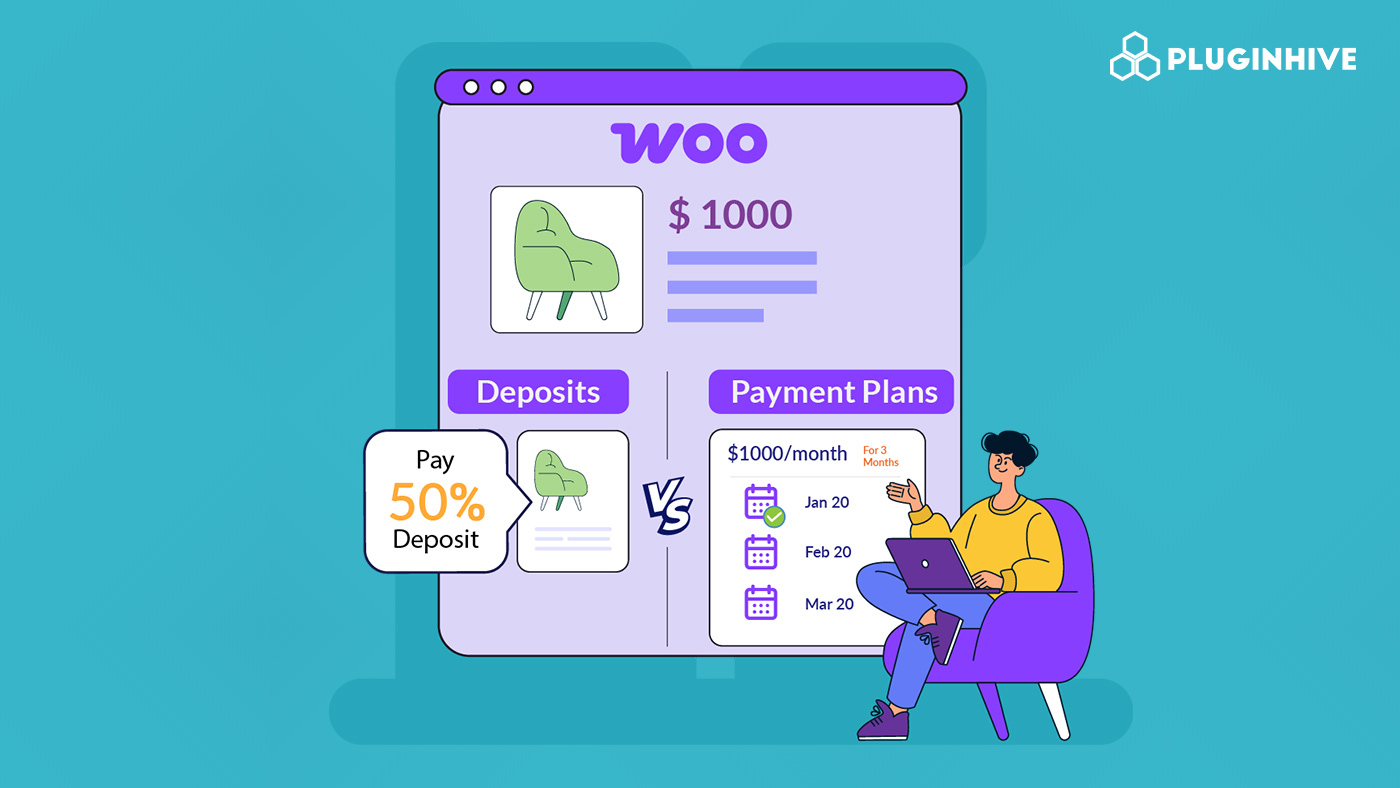
Many customers abandon their carts when the full price feels too expensive upfront. WooCommerce deposits help you solve this by allowing customers to pay part of the amount now and the rest later, while payment plans spread the cost across multiple payments. Choosing the wrong option can lead to cash flow gaps, higher cancellation rates, or customers who hesitate to buy, all of which hurt your bottom line.
In this article, you’ll learn the difference between WooCommerce deposits and payment plans, see when each option works best, and choose the right approach for your WooCommerce store.
Table of Contents
- Understanding WooCommerce Deposits
- Understanding WooCommerce Payment Plans
- WooCommerce Deposits vs. Payment Plans: Key Differences
- How You Can Offer Deposits or Payment Plans in WooCommerce
- When to Use Deposits in Your WooCommerce Store
- When to Use Payment Plans in Your WooCommerce Store
- Conclusion
- FAQs
Understanding WooCommerce Deposits
WooCommerce deposits let customers pay part of the order amount instead of paying everything upfront. You decide how much they pay first, either as a fixed amount or a percentage. The rest of the payment is collected later, which makes higher-priced products easier for customers to buy.
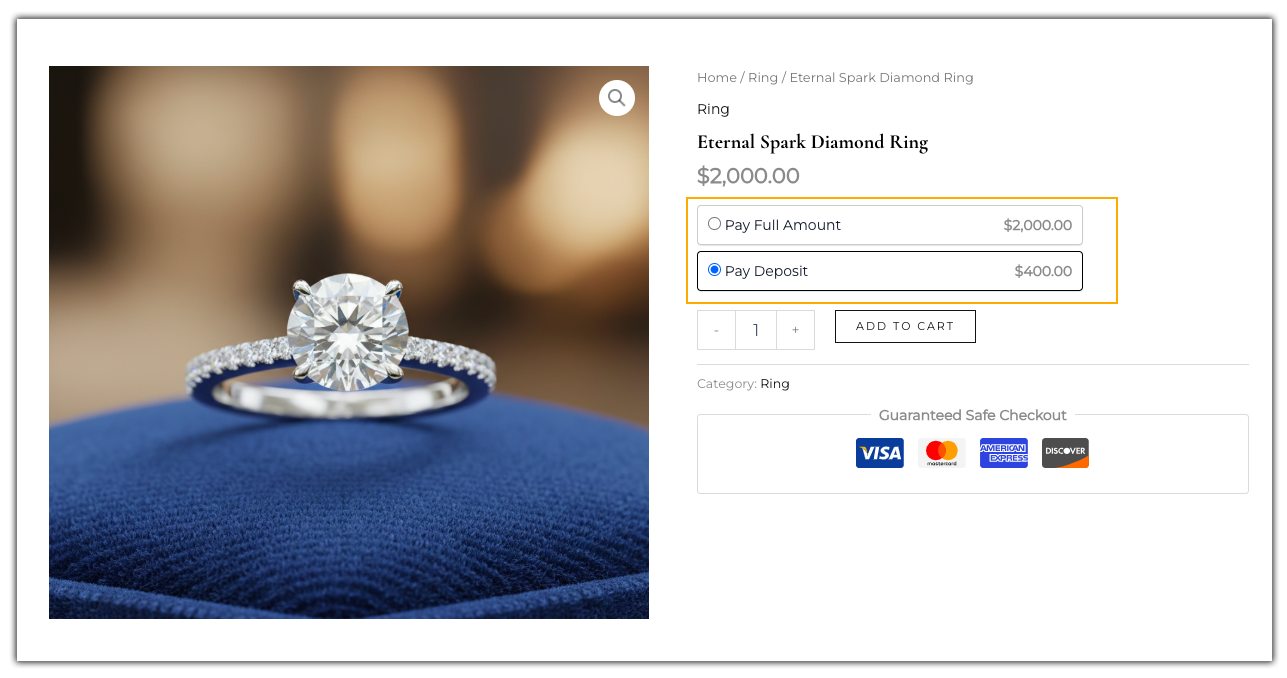
For example, if a product costs $2,000, you can ask for a 20% deposit at checkout. The customer pays $400 now and pays the remaining $1600 later, usually before you deliver the product or service. This way, customers feel less pressure at checkout, and you still receive money early.
Understanding WooCommerce Payment Plans
WooCommerce payment plans allow customers to split the total order amount into multiple payments over time. Instead of paying a large amount upfront, customers pay smaller amounts on a set schedule. This makes higher-priced products feel more affordable and reduces hesitation at checkout.
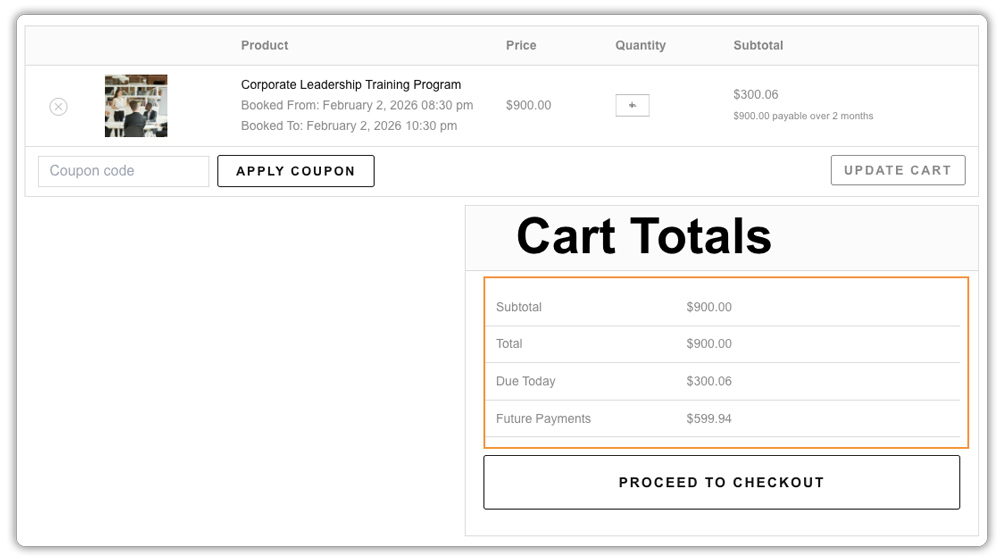
For example, if you offer a product or service priced at $900, you can offer a payment plan with three monthly payments of $300. The customer pays the first installment at checkout, and the remaining payments are collected later. This approach helps customers manage their budget while still completing the purchase.

WooCommerce Deposits vs. Payment Plans: Key Differences
Both deposits and payment plans reduce the upfront cost for customers, but they work in very different ways. This comparison highlights what really sets them apart from a business perspective.
| Factor | WooCommerce Deposits | WooCommerce Payment Plans |
|---|---|---|
| Upfront payment | Customers pay a portion of the total price | Customers pay a smaller first installment |
| Remaining balance | Paid later, often before delivery | Split into multiple scheduled payments |
| Cash flow | You receive money quickly | Revenue comes in over time |
| Customer commitment | Higher due to the upfront payment | Lower early commitment |
| Risk of cancellations | Lower | Higher if payments stop |
| Management effort | Simple to manage | Requires ongoing payment tracking |
| Best use cases | Bookings, rentals, custom products | Courses, high-ticket products, long-term services |
The main difference comes down to timing and risk. Deposits help you secure early revenue and commitment, while payment plans focus on spreading costs for customers over time.
Now let’s look at how you can actually implement either option in your WooCommerce store.
How You Can Offer Deposits or Payment Plans in WooCommerce
WooCommerce does not include built-in options for deposits or payment plans. If you want to offer deposits or let customers pay over time, you need an additional solution designed for flexible payments.
PH Deposits for WooCommerce by PluginHive makes it easy to offer both deposits and payment plans from one place. The plugin takes care of the payment process in the background while letting you decide how customers pay, whether that’s a partial upfront amount or payments spread over time, based on what works best for your products.
You can set deposits as a percentage of the product price, such as 30% upfront, or use a fixed amount like $50. You also choose whether deposits are required or optional at checkout. These rules can apply across your store or be customized for individual products.

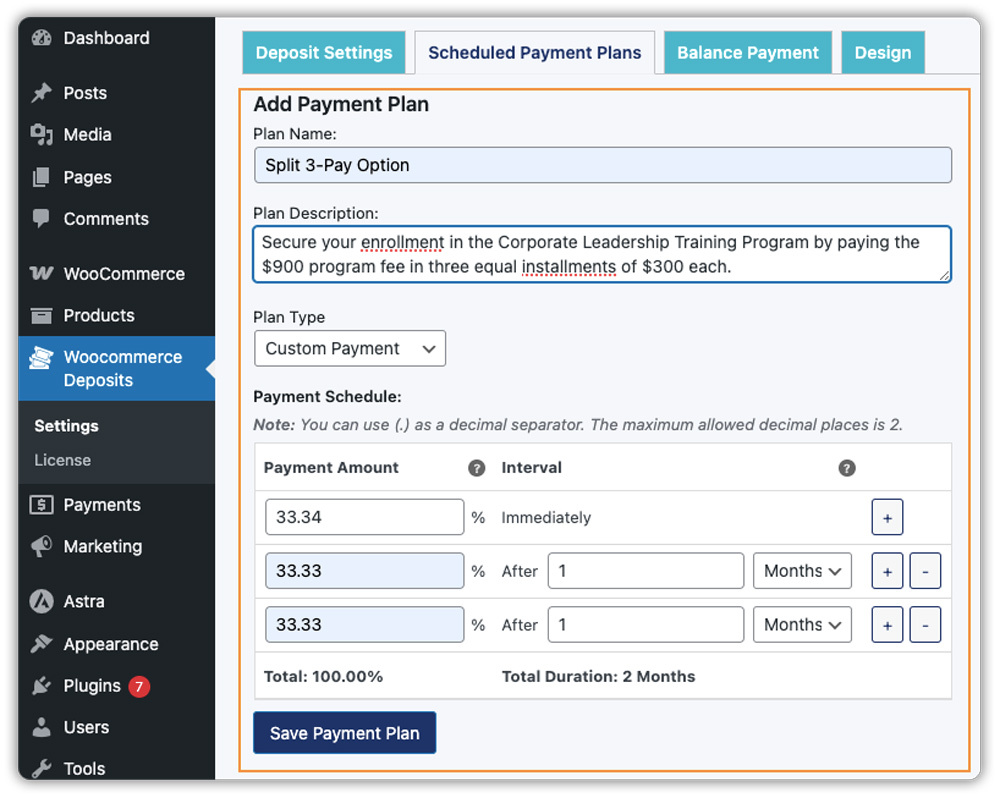
If you want to offer payment plans, you can create schedules with daily, weekly, or monthly payments. You can also combine an upfront payment with installments. For example, a customer can pay part of the amount upfront and the rest in monthly payments.
Handling balance payments stays simple as well. Customers receive clear reminders before payments are due, and they can view and complete remaining payments from their account. This reduces missed payments and saves you from manual follow-ups.
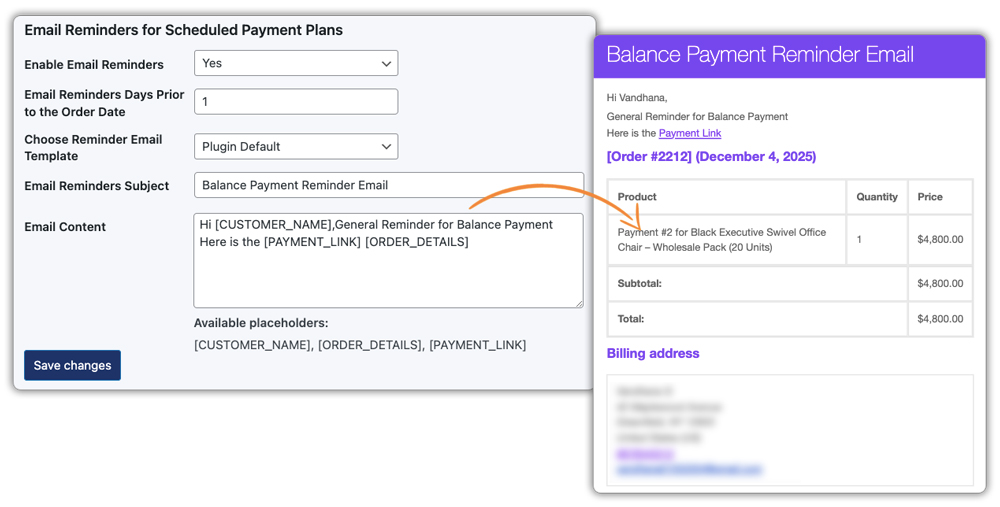
You also get complete flexibility at the product level. You can offer deposits on some products, payment plans on others, and require full payment for the rest

After setup, customers see clear payment choices on product pages and at checkout. They select a deposit or payment plan, complete the initial payment, and know exactly what to pay next and when.
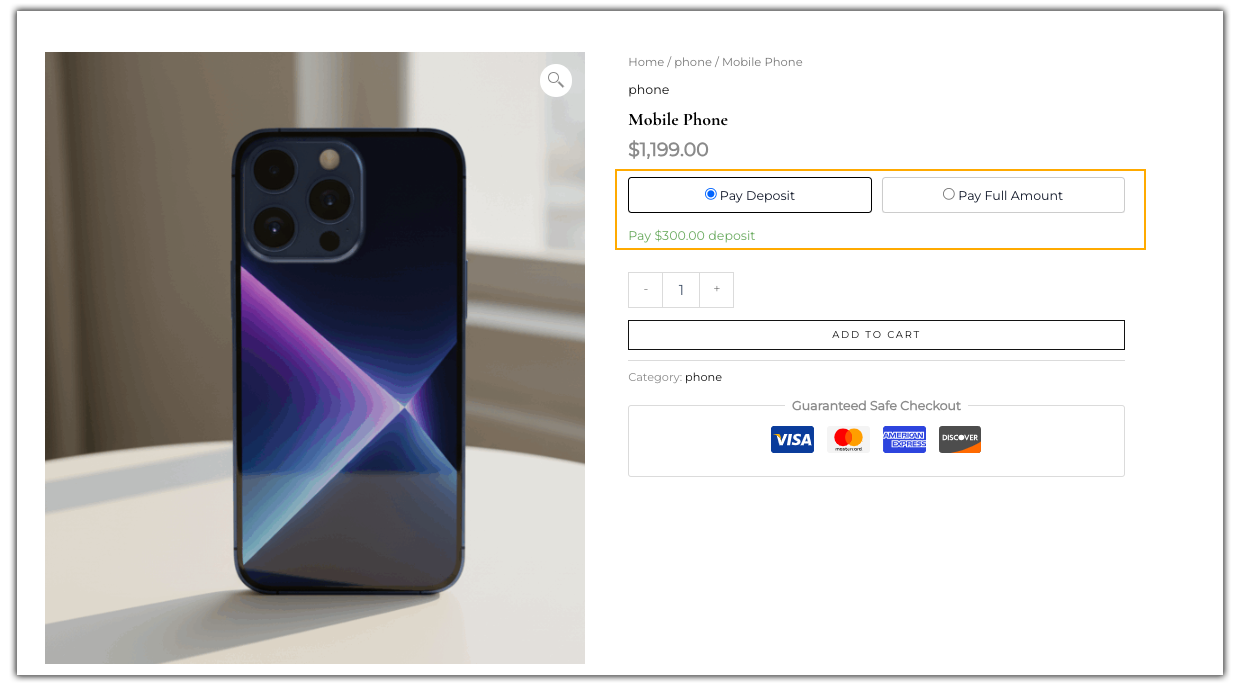
On your side, payments stay organized and predictable. The plugin tracks balances and schedules automatically, so you can focus on fulfilling orders instead of managing payments.
If you want help getting started, the setup guide for deposits shows you how to configure everything without technical confusion.
Offering deposits or payment plans doesn’t have to be complicated. With PH Deposits for WooCommerce, you give customers flexible payment options while maintaining control over revenue and order management.
When to Use Deposits in Your WooCommerce Store
Deposits work best when your business needs early commitment or upfront revenue before fulfilling an order. The table below highlights situations where deposits are usually the better option.
| Scenario | Why Deposits Make Sense |
|---|---|
| Booking-based services | Deposits reduce no-shows and confirm serious intent before reserving time. |
| Rentals and hire services | You secure part of the payment before equipment or products leave your inventory. |
| Custom or made-to-order products | Upfront payments help cover material and production costs early. |
| Limited stock or availability | Deposits prevent customers from holding inventory without commitment. |
| Services with preparation work | Early payment reduces risk before you invest time or resources. |
Use deposits when commitment matters more than flexibility. They help you move forward with confidence once an order is placed.
When to Use Payment Plans in Your WooCommerce Store
Payment plans are more suitable when affordability matters more than upfront commitment, and customers receive value over time. These scenarios show where payment plans work best.
| Scenario | Why Payment Plans Work Well |
|---|---|
| Digital courses and programs | Customers access content over time, making installment payments feel natural. |
| Coaching or consulting services | Payments align with ongoing service delivery. |
| High-ticket products | Spreading costs makes expensive items easier to purchase. |
| Long-term services | Customers prefer smaller recurring payments instead of one large payment. |
| Budget-conscious audiences | Lower upfront cost encourages more completed purchases. |
Choose payment plans when affordability drives decisions, and your business can handle payments collected over time.
Conclusion
WooCommerce deposits and payment plans both help reduce cart abandonment, but they serve different business needs. Deposits focus on upfront commitment, predictable cash flow, and lower cancellation risk, while payment plans make higher prices easier for customers to manage through gradual payments.
With a solution like PH Deposits for WooCommerce, you don’t have to choose just one approach. You can offer deposits for certain products and payment plans for others, based on what fits each product and customer journey best. This flexibility allows you to increase conversions without sacrificing control. If you need help setting up deposits or payment plans in your WooCommerce store, the PluginHive support team is ready to assist you with configuration and guidance.
FAQs
- Which payment option is best for WooCommerce stores?
It depends on what you sell. WooCommerce deposits work well when you need upfront commitment, while payment plans are better when customers want to spread payments. Many stores use both. - Can I offer both deposits and payment plans in the same WooCommerce store?
Yes. With PH Deposits for WooCommerce, you can use deposits for some products and payment plans for others. You can also set different payment rules for individual products. - Can deposits be mandatory or optional in WooCommerce?
You can choose either option. Mandatory deposits work well for bookings and custom products where commitment is important. Optional deposits give customers more flexibility and can improve sales for high-priced items. PH Deposits for WooCommerce lets you set this store-wide or per product. - How can shopping cart abandonment be reduced?
Studies show that 35% of shoppers are more likely to complete purchases when they can pay in installments. Using PH Deposits for WooCommerce to offer deposits or payment plans lowers the upfront cost and makes expensive products easier to buy.
