


Many WooCommerce stores sell products or services that customers are willing to buy but not always able to pay for in a single transaction. This is common with high-value items, custom work, bookings, or services delivered over time. In these situations, splitting the total cost into smaller payments can help confirm orders while keeping payment expectations realistic.
Payment plans in WooCommerce are often associated with subscriptions, which are designed for ongoing or repeating charges. For one-time purchases, subscriptions can add unnecessary structure and complexity. This article explains how payment plans can be offered without subscriptions by utilizing deposit-based and partial payment methods, ensuring payments are clear, finite, and tied to a single order.
Table of Contents
- Why Flexible Payment Options Matter for WooCommerce Stores
- WooCommerce Subscriptions vs Payment Plans: Understanding the Difference
- How to Offer Payment Plans in WooCommerce Without Using Subscriptions
- When Payment Plans Make More Sense Than Subscriptions
- Conclusion
- FAQs
Why Flexible Payment Options Matter for WooCommerce Stores
A large number of abandoned carts happen not because customers dislike the product, but because paying the full amount at once feels difficult. This is especially common in WooCommerce stores that sell higher-value or made-to-order items.
Why this matters
- Upfront cost is the biggest barrier: Even interested buyers pause when the full amount is due immediately.
- Splitting payments feels manageable: Smaller payments make the same price easier to accept.
- It fits real buying behaviour: Customers often expect to pay in stages for services or custom work.
- The product value stays the same: Only the payment timing changes, not the price.
Flexible payment options remove hesitation without changing what you sell or how much you charge. For many WooCommerce stores, this simple shift helps customers move from interest to purchase more easily.
To see a detailed breakdown of which industries benefit most from this setup, you can refer to this guide on industries benefiting from WooCommerce Deposits.
WooCommerce Subscriptions vs. Payment Plans: Understanding the Difference
Choosing the right payment setup depends on what you sell and how you expect customers to pay. In WooCommerce, subscriptions and payment plans may look similar, but they serve different purposes.
Recurring vs. Finite Payments
WooCommerce Subscriptions are built for ongoing purchases. Your customer is charged at fixed intervals, monthly or yearly, and payments continue until the subscription ends. This model works when access or delivery is continuous.
Payment plans are built for one-time purchases. You split a fixed total price into smaller payments. Once the final amount is paid, the transaction is complete. There are no renewals and no ongoing billing.
Comparison at a Glance
| Aspect | Subscriptions | Payment Plans |
|---|---|---|
| Purpose | Provides ongoing access to a product or service | Allows customers to pay for a one-time purchase in installments |
| Payment Type | Automatically recurring payments (weekly, monthly, yearly) | Fixed number of scheduled payments |
| End Point | Continues until cancelled or subscription term ends | Ends once the final installment is completed |
| Billing Flexibility | Can be paused, upgraded, downgraded, or cancelled | No changes once the payment plan is set |
| Best Suited For | Memberships, SaaS products, recurring services | Products, services, high-value bookings |
If you use subscriptions for a one-time product, customers may hesitate. Many people do not want to sign up for recurring charges when they only plan to make a one-time purchase.
Payment plans avoid this issue. They give customers a clear start and end to their payment. This clarity builds trust and keeps the purchase simple. With this difference clear, the next step is understanding how you can offer payment plans in WooCommerce without using subscriptions.
How to Offer Payment Plans in WooCommerce Without Using Subscriptions
Implementing a structured payment system means your store can handle larger transactions with the same simplicity as a regular sale. By using a deposit-and-balance model instead of subscriptions, you offer customers a clear, one-time path to owning their purchase.
To add this functionality, a dedicated tool like the PH Deposits for WooCommerce can be used. This setup lets you keep the transaction as a standard sale while providing the payment flexibility customers appreciate.
How This Helps Your Store Operations:
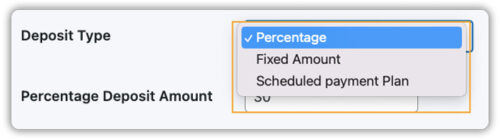
- Flexible Payment Structures: You can choose between fixed deposits, percentage-based payments, or scheduled multi-step plans. This lets you match the payment method to your products
For example, a 50% deposit for a custom ring or a four-installment plan for a premium sofa.
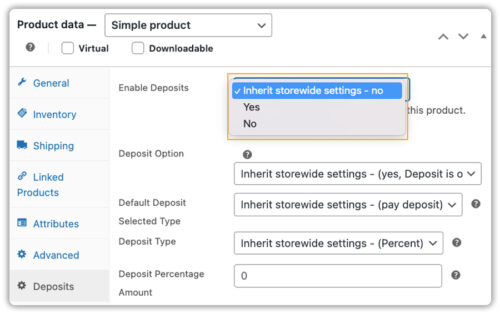
- Targeted Application: You have the control to apply payment plans exactly where they make sense, whether for specific high-ticket items, custom-made goods, or your entire catalogue.
- Transparent Checkout Experience: The plugin clearly shows customers what they pay now and what it charges later, keeping the checkout process simple and transparent.

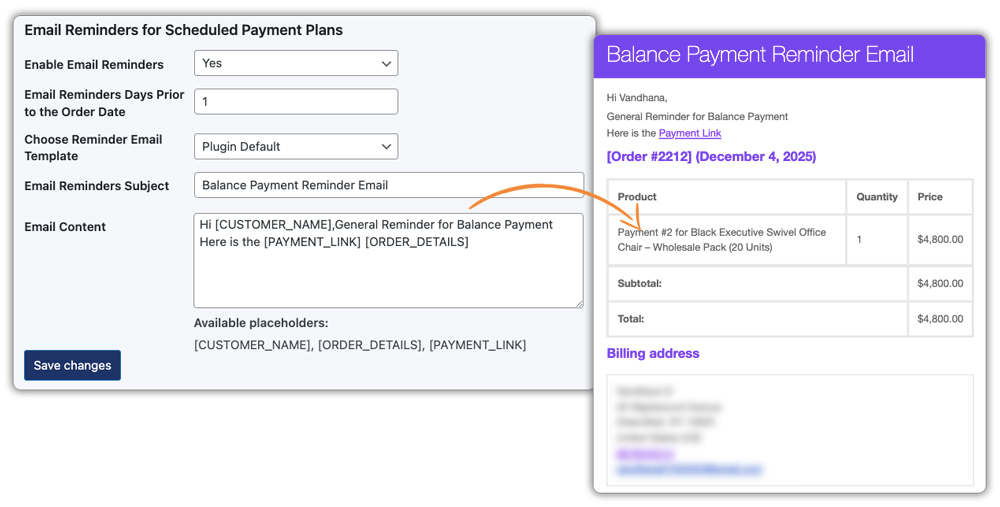
- Automated Balance Collection: The process reduces manual admin work. You can schedule automated reminder emails to notify customers when their next payment is due, with a direct link for them to pay. This helps prevent missed payments.
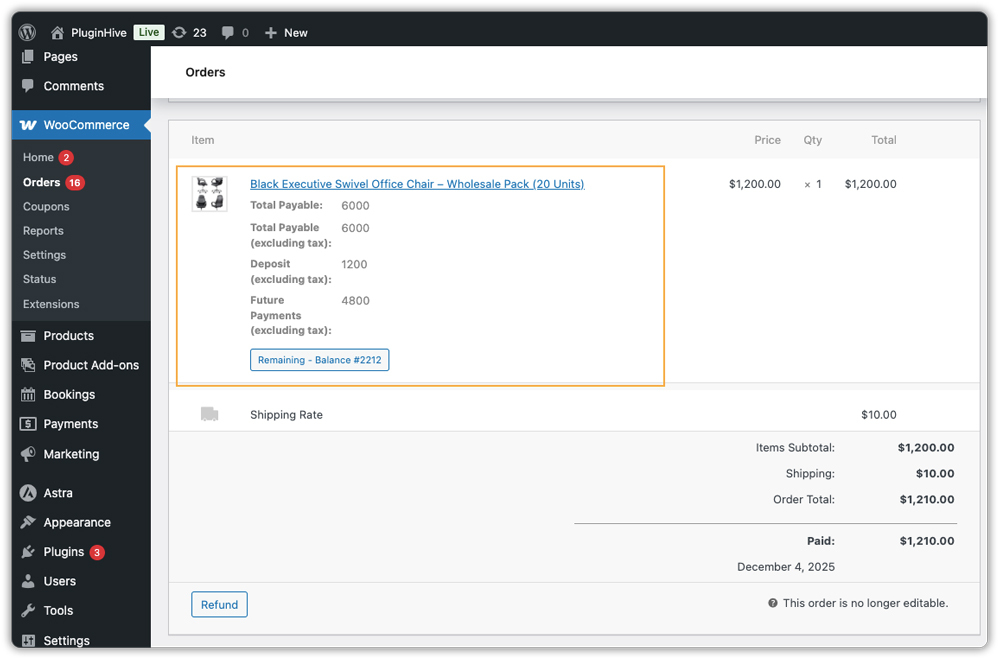
- Centralized Order Management: Your WooCommerce dashboard tracks all partial payments and scheduled installments, letting you generate balance invoices and monitor payment progress from one place.
By using this deposit-based method, you add helpful structure to your payments. You avoid the complexity and ongoing commitment of a subscription model, making it easier for customers to say “yes” to larger purchases while keeping your order management straightforward.
Note: For implementation details, refer to the setup documentation for the PH WooCommerce Deposits plugin, which outlines how to configure deposits and scheduled payment plans.
When Payment Plans Make More Sense Than Subscriptions
Deciding whether to use a payment plan often depends on the nature of what you are selling. While subscriptions are excellent for ongoing services, payment plans are the standard for high-value, finite transactions.
Below is a quick reference to help you determine how a deposit-based system aligns with your specific sales model:
| Transaction Type | Why a Payment Plan Works Best | How It Replaces a Subscription |
|---|---|---|
| High-ticket products | Breaks down expensive purchases into affordable installments. | Payments stop once the total amount is paid, with no renewals. |
| Custom commissions | Collects an upfront payment for materials and progress-based payments. | Billing is tied to project completion, not recurring cycles. |
| Advance bookings | Secures reservations with an initial payment before service delivery. | Confirms a single booking instead of ongoing access. |
| Wholesale or B2B orders | Allows buyers to reserve inventory with a deposit and pay later. | Each order is processed as a one-time transaction. |
The choice between subscriptions and payment plans comes down to how the transaction ends. When the sale is complete after delivery or fulfillment, a deposit-based payment plan provides the structure needed without introducing ongoing billing. This makes payment plans a practical fit for one-time purchases that require flexibility, not continuity.
Conclusion
Offering payment plans in WooCommerce does not mean using subscriptions. A deposit-based approach gives customers a clear and limited way to complete their purchase, which fits well for high-value or custom items.
By reducing the upfront cost, this model makes buying easier without creating ongoing billing. Tools like the PH Deposits for WooCommerce plugin by PluginHive can help manage these payments in a structured way. If you need help setting this up, the PluginHive support team can guide you through the process.
FAQs
Q. Can I offer my customers a payment plan in WooCommerce?
Yes. You can offer payment plans in WooCommerce using the PH Deposits for WooCommerce plugin, allowing customers to pay in stages without using subscriptions.
Q. How do payment plans in WooCommerce differ from subscriptions?
Subscriptions are for recurring services. Payment plans are for one-time purchases with a fixed total. Once the final payment is made, billing stops automatically.
Q. How are balance payments handled without subscriptions in WooCommerce?
Balance payments are usually collected through invoices or payment reminder emails. Customers complete payments from their accounts, without recurring charges, when using the PH deposits plugin.
Q. Are payment plans the same as Buy Now, Pay Later in WooCommerce?
No. Third-party providers handle Buy Now, Pay Later, while the store manages WooCommerce payment plans using deposits and partial payments.
