


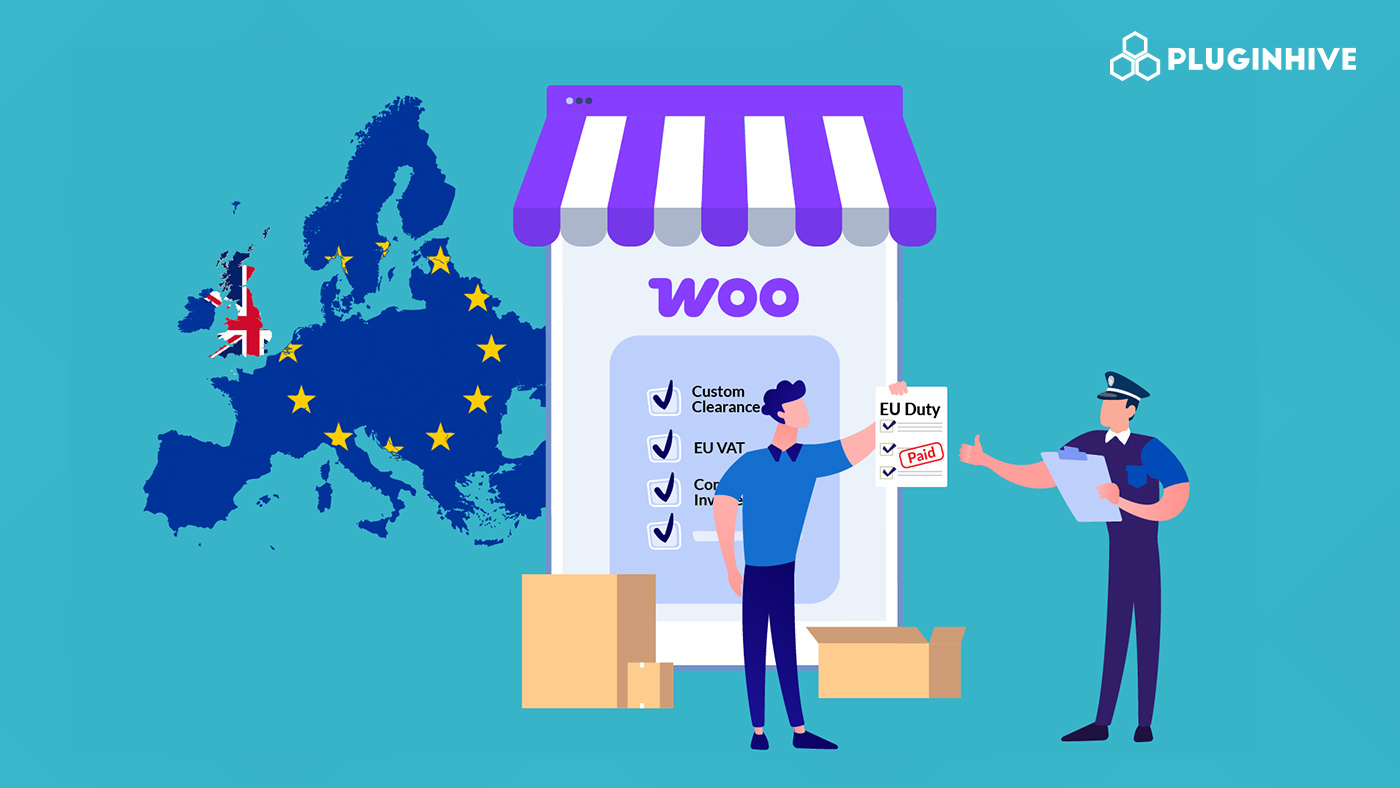
The European Union is introducing new tax and customs rules in 2026 that will affect how WooCommerce stores sell to EU customers. These changes focus on improving VAT compliance and making cross-border e-commerce more transparent.
For WooCommerce merchants, staying aware of these updates is important to avoid compliance issues and ensure uninterrupted sales across EU countries. Preparing in advance will help your store adapt smoothly as the new regulations come into force.
On This Page
- Key EU VAT Changes in 2026 and Their Impact on WooCommerce Stores
- New Duty Rules for Low-Value E-Commerce Parcels
- How to Keep Your WooCommerce Store Compliant and Future-Ready
- Conclusion
Key EU VAT Changes in 2026 and Their Impact on WooCommerce Stores
In 2026, several European countries will introduce VAT rate changes that directly affect how WooCommerce stores calculate taxes for domestic and cross-border sales. Most of these updates come into effect on January 1, 2026, making it critical for online sellers to review and adjust their tax configurations in advance.
Countries Increasing VAT Rates in 2026
WooCommerce stores selling into the following regions may see higher tax amounts applied at checkout, depending on product category:
- Lithuania: The reduced VAT rate for essential products and services will increase from 9% to 12%. This can impact stores selling everyday goods previously taxed at a lower rate.
- Netherlands: VAT on accommodation bookings will rise sharply from 9% to 21%. It significantly affects WooCommerce stores operating in travel, lodging, or short-term rental bookings.
- Slovakia: Products classified as high-sugar and high-salt foods will be taxed at a higher rate of 23%. It might affect food, nutrition, and specialty grocery sellers.
- Switzerland: A planned increase in the standard VAT rate from 8.1% to 8.8% has been postponed to 2028. So no VAT increase will apply in Switzerland during 2026.
Countries Reducing VAT Rates in 2026
Some VAT changes in 2026 are favorable for WooCommerce merchants, lowering tax burdens on specific product categories:
- Finland: VAT on essential goods and services will decrease slightly from 14% to 13.5%, offering marginal savings for qualifying products.
- Germany: The 7% VAT rate on restaurant food and catering services. Previously a temporary measure, it will become permanent, providing long-term clarity for food and hospitality sellers.
- Austria: VAT will be reduced to 0% on menstrual and contraceptive products. This will benefit WooCommerce stores selling health and personal care items in these categories.
Impact on WooCommerce Stores
These VAT updates affect WooCommerce merchants in several ways:
- Tax calculation accuracy becomes critical to avoid over- or under-charging customers
- Product category mapping must reflect country-specific VAT rules
- Cross-border sellers must manage different VAT rates per destination country
- Pricing strategies may need adjustment to maintain margins after VAT changes
New Duty Rules for Low-Value E-Commerce Parcels
Beginning 1 July 2026, the EU will introduce a fixed customs duty of €3 on most low-value parcels entering the bloc from outside the EU, even when they are valued under €150. Previously, these small imports were generally duty-free under the EU’s low-value threshold. This new duty applies to goods shipped through the Import One-Stop Shop (IOSS) system, which currently accounts for around 93% of all e-commerce parcel flows into the EU.
Although this €3 levy is temporary, it remains in place until the EU’s broader customs data infrastructure and reforms are fully operational (expected around 2028). It represents a meaningful increase in landed cost for many WooCommerce merchants selling from outside the EU.
What this means for WooCommerce stores selling into the EU:
- Parcels that once entered without customs duty will now incur a fixed €3 charge, in addition to VAT at the appropriate rate.
- With low-value e-commerce making up the bulk of imported parcels, this duty can materially affect pricing, checkout totals, and customer expectations.
- Merchants should update tax and shipping calculations to reflect this new cost to avoid surprises for EU buyers.
Let’s now look at how you can keep your WooCommerce store compliant, adaptable, and future-ready while continuing to ship products smoothly to EU customers.
Keep Your WooCommerce Store Compliant and Future-Ready
When shipping products to EU customers, WooCommerce stores often partner with multiple carriers based on destination, delivery speed, and product type. Among the available options, UPS stands out as a widely used and reliable choice for cross-border shipping into the EU.
Managing EU-bound shipments becomes easier with the WooCommerce Shipping Plugin for UPS with Print Label, which helps WooCommerce stores stay compliant while handling international shipping efficiently.
If you’re new to the plugin, start with this setup guide: UPS Plugin Setup for WooCommerce.
Once the plugin is set up in your store, you can enable tax on shipping rates. Accordingly, applicable taxes are automatically added to UPS live rates at checkout.
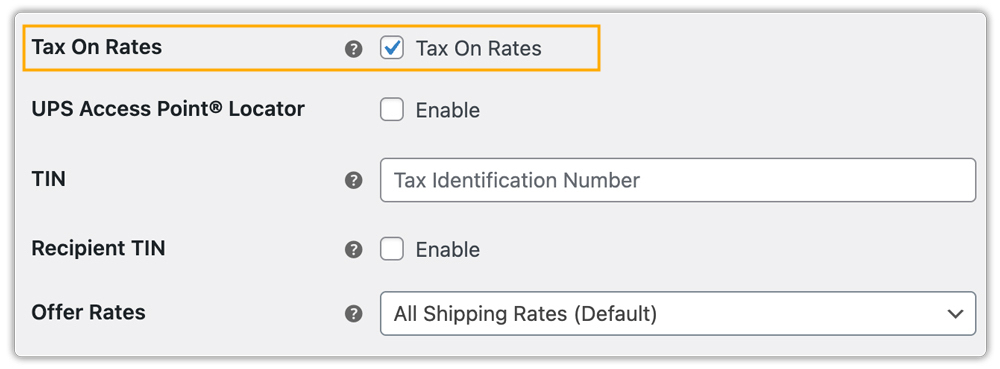
You can enter your Vendor Collect ID (VCID) under Vendor Info. This ensures VAT collected at checkout is passed to UPS for low-value EU shipments. You can also set the Default Consignee Type to align shipment details with EU customs requirements.

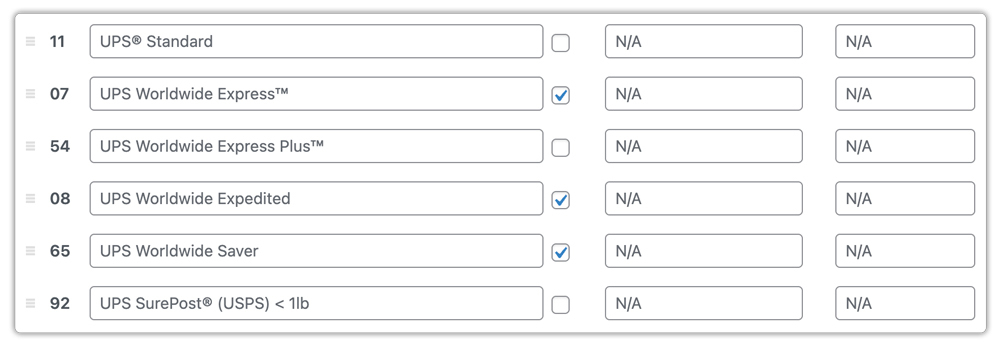
Within the plugin settings, you can select which UPS shipping services you want to display in the cart and checkout.
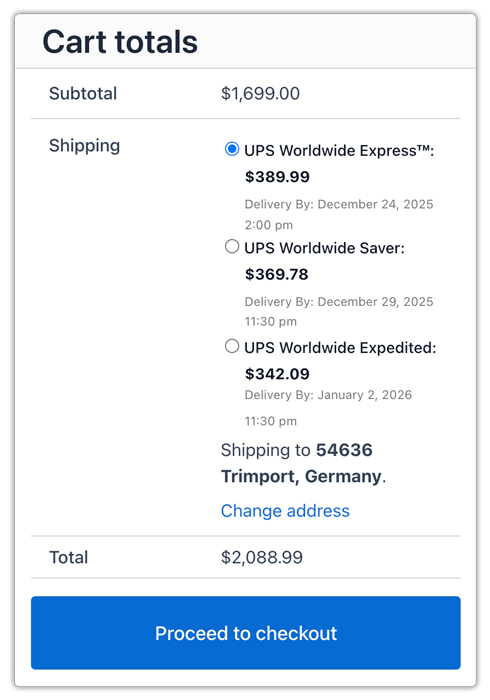
Accordingly, the plugin will display live UPS shipping rates automatically at checkout, including applicable taxes. Since the UPS API fetches rates in real time, customers always see accurate and up-to-date pricing.
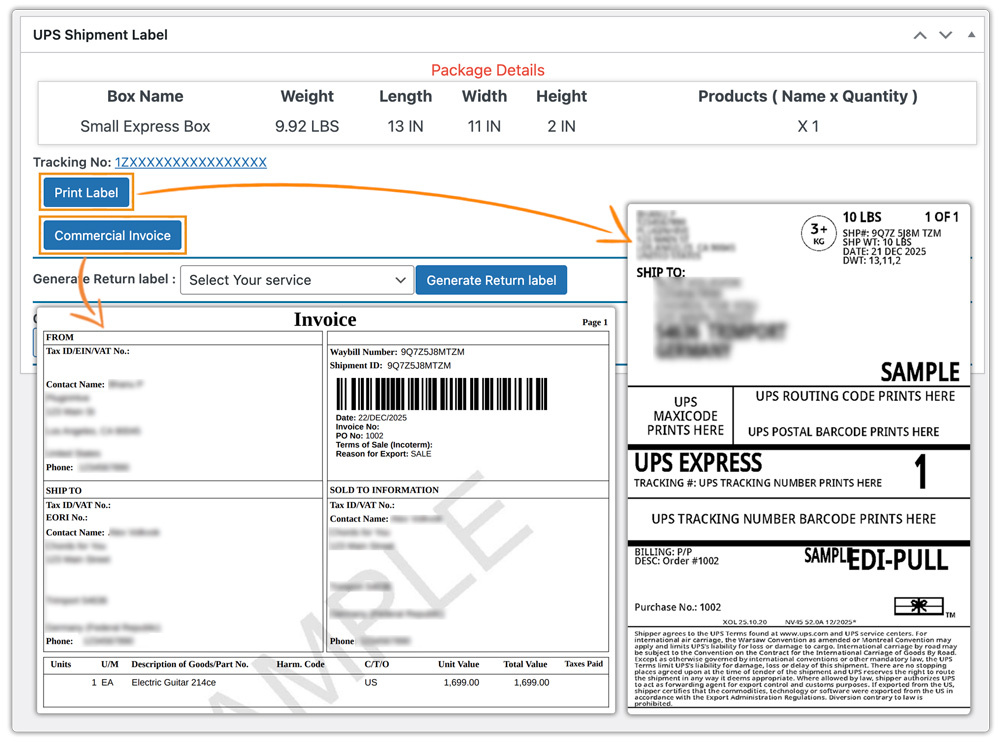
For order fulfillment, you can generate and print UPS shipping labels, along with commercial invoices, directly in WooCommerce. This is especially important for international shipments, where proper documentation is essential to avoid customs delays.
Similarly, you can ship with FedEx via the WooCommerce Shipping Plugin for FedEx with Print Label.
- If you ship from Canada and prefer Canada Post as your carrier, you can use the WooCommerce Canada Post Shipping Plugin.
- Shipping from Australia (Australia Post): WooCommerce Australia Post MyPost Business Shipping Plugin.
- Shipping from the UK (Royal Mail): WooCommerce Royal Mail Shipping Plugin with Tracking.
- Shipping from Nordic regions (PostNord): PostNord Shipping Plugin for WooCommerce with Print Label.
Conclusion
The 2026 EU tax and customs updates bring important changes for WooCommerce stores selling to EU customers. Updated VAT rates and new duties on low-value parcels make accurate tax handling and transparent pricing essential. By preparing early and using the right solutions, merchants can avoid unexpected costs and continue shipping smoothly across EU markets.
For further assistance or questions, feel free to reach out to PluginHive Support.
